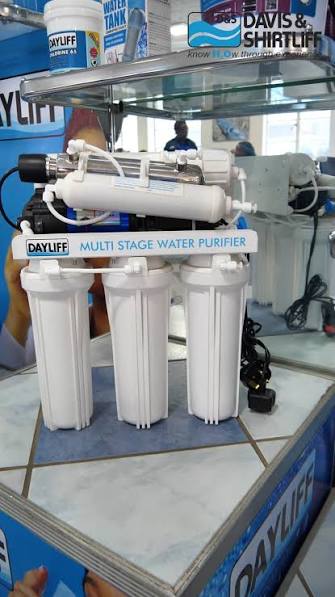
Water Filter and Purifier for Tank is a treatment solution designed to remove or reduce unwanted particles, sediment, odour, minerals, and selected contaminants from water stored in a tank. It can make water cleaner, safer, fresher, and more suitable for household and commercial applications. This is especially important where properties depend on borehole water, well water, or inconsistent municipal supplies. A properly designed system can also protect plumbing, appliances, storage tanks, and downstream purification equipment.
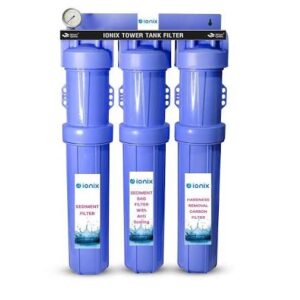
What Is a Water Filter and Purifier for Tank?
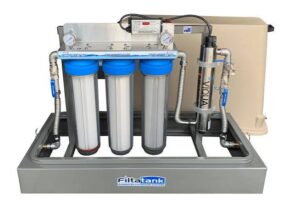
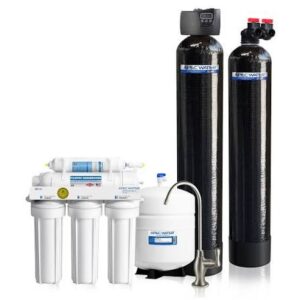
A Water Filter and Purifier for Tank combines filtration or purification technologies according to the quality of the incoming water. Basic systems may use a sediment filter and carbon filter, while advanced installations can include membranes, pumps, UV light, water softeners, and remineralization. The correct configuration depends on contaminants such as sediment, iron, hardness, high TDS, salt, microorganisms, or unpleasant odour. Therefore, water testing should come before selecting equipment based only on price or appearance.
For homes, offices, estates, schools, hospitals, hotels, restaurants, churches, factories, and production facilities, water treatment requirements can vary considerably. A small household may need a compact water tank filter, while a large facility could require a high-flow commercial or industrial treatment plant. Some applications require drinking-water purification, while others only require cleaner water for washing, toilets, irrigation, or industrial processes. Understanding the end use is therefore an essential part of choosing the right system.
10 Powerful Benefits of a Water Filter and Purifier for Tank
1. Reduces Sediment and Cloudy Water
Sand, silt, rust, and other suspended particles can enter storage tanks through boreholes, wells, pipes, or external contamination. A water filter for water tank can trap many of these particles before they reach household fixtures. This can improve water appearance and reduce the gritty sensation associated with heavily contaminated supplies. Sediment filtration is often the first stage in a professional treatment system.
2. Improves Taste and Unpleasant Smell
Water with a metallic, earthy, chlorine-like, or musty taste can make drinking uncomfortable. Activated carbon filtration can help reduce certain compounds responsible for taste and odour problems. The result can be noticeably fresher water for drinking and cooking. However, carbon filtration should not be treated as a universal solution for every contamination problem.
3. Provides Advanced Purification
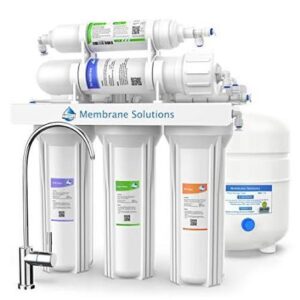
Where dissolved contaminants are a concern, reverse osmosis can provide deeper treatment than conventional sediment filtration. A reverse osmosis system uses pressure to force water through a semi-permeable reverse osmosis membrane. Depending on system design, this technology can reduce dissolved salts, minerals, and several other contaminants. Pretreatment is important because excessive sediment, iron, or hardness can shorten membrane life.
4. Helps Manage Hard Water
Hard water can leave white deposits around taps, showers, heaters, and appliances. A suitable water softening stage can reduce hardness before water reaches sensitive equipment. However, a softener and a purifier perform different functions. Professional treatment design determines whether a property needs softening, filtration, purification, or a combination.
5. Protects Plumbing and Appliances
Rusty water and sediment can gradually affect pipes, washing machines, water heaters, refrigerators, pumps, and other equipment. Installing a water tank filter before distribution can reduce the amount of suspended material entering the plumbing network. This may lower avoidable maintenance requirements over time. It also creates a cleaner foundation for advanced drinking-water treatment.
6. Supports Whole-House Water Treatment
A property with multiple bathrooms, kitchens, laundry areas, and outdoor outlets may require whole-home treatment. A whole house reverse osmosis system can provide advanced purification where the source water requires it. However, whole-house RO is not automatically the best solution for every property. A water-quality assessment should determine whether conventional filtration, softening, UV treatment, RO, or a combined system is appropriate.
7. Works With Borehole and Well Water
Borehole and well water can contain different combinations of sediment, iron, hardness, minerals, microorganisms, and dissolved substances. This makes a standard one-size-fits-all filter unreliable for many properties. A professional system can combine sediment filtration, iron removal, carbon filtration, softening, UV, or RO when required. The treatment stages should reflect laboratory results rather than assumptions about the water source.
8. Supports Homes and Commercial Facilities
A properly specified Water Filter and Purifier for Tank can serve residential apartments and large commercial properties. Applications include hotels, restaurants, hospitals, schools, offices, estates, factories, churches, and water-production facilities. High-demand sites may require high-capacity pumps, pressure tanks, larger filtration vessels, and multiple treatment stages. Flow rate and daily water consumption should therefore be considered alongside equipment specifications.
9. Makes Maintenance More Predictable
Every treatment system requires maintenance, although the schedule depends on water quality and usage. Sediment cartridges, carbon filters, membranes, UV components, and other consumables eventually require replacement. Warning signs include reduced flow, pressure changes, unusual taste, unpleasant odour, or declining purification performance. A professional maintenance plan can include filter replacement, sanitisation, membrane inspection, pressure testing, and system troubleshooting.
10. Can Be a Cost-Effective Long-Term Investment
The cheapest filter is not necessarily the most affordable solution over its operating life. Buyers should consider equipment price, installation cost, replacement cost, electricity consumption, maintenance cost, water wastage, membrane life, and spare-part availability. These factors provide a more realistic total-cost comparison. A reliable system should balance performance, durability, running cost, serviceability, and the actual water-quality problem.
Choosing the Right Water Filter and Purifier for Tank
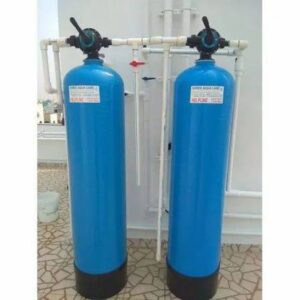
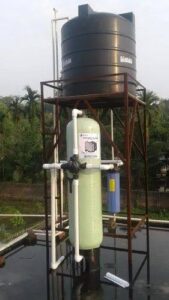
The best buying guide begins with water analysis. Test the source for relevant parameters such as TDS, pH, hardness, iron, turbidity, microbial contamination, and salinity. Then determine the required flow rate, storage capacity, daily consumption, pressure, and intended use. This step prevents the common mistake of buying an advanced system that does not address the property’s primary water-quality problem.
Vistacraft Builders provides engineered water-treatment solutions for residential, commercial, and industrial applications. Its approach can accommodate different treatment requirements, including sediment filtration, carbon filtration, softening, UV purification, and reverse osmosis water treatment. Systems can be designed for homes and businesses across Nigeria and other African markets. Professional installation and maintenance support can also help ensure that equipment performs according to its specifications.
Regional Water Treatment Applications
Water-quality challenges differ across Nigeria and West Africa, making local application knowledge valuable. Treatment requirements can arise in Lagos, Abuja, Port Harcourt, Ibadan, Benin, Enugu, Kano, Kaduna, Jos, Uyo, Asaba, and Warri. They also extend to Bonny Island, Sokoto, Minna, Zaria, Katsina, Dutse, Maiduguri, Gombe, Bauchi, Yola, and Jalingo.
Demand also exists across Makurdi, Abakaliki, Awka, Onitsha, Owerri, Umuahia, Abeokuta, Ilorin, Lokoja, Akure, Oshogbo, Ekiti, and Ile-Ife. In the Federal Capital Territory and surrounding areas, applications include Suleja, Karu, Mararaba, Keffi, Gurara, Zuba, Gwagwalada, Kuje, Bwari, and Abaji. Regional requirements continue across Accra, Kumasi, Cotonou, Lomé, Abidjan, Monrovia, Freetown, Banjul, Cape Verde, and Dakar.
Reverse Osmosis vs Conventional Filtration
A conventional filter primarily targets particles or specific contaminants depending on its media. Reverse osmosis provides a different level of treatment by using membrane separation under pressure. Systems may be configured as 5 stage reverse osmosis system, 6 stage reverse osmosis system, or 7 stage reverse osmosis system, depending on the treatment objective. Additional stages can include sediment filtration, carbon filtration, remineralization, UV treatment, or other specialised processes.
For drinking water, an under sink reverse osmosis system can provide point-of-use purification. Commercial facilities may require a commercial reverse osmosis system, while large production facilities can require an industrial reverse osmosis system. The right option depends on capacity, source-water quality, recovery requirements, available pressure, and intended application.
Frequently Asked Questions
Is a Water Filter and Purifier for Tank necessary?
It can be valuable where stored water contains sediment, odour, iron, hardness, microorganisms, or other water-quality concerns. The appropriate treatment should be selected after testing the water source.
Is reverse osmosis suitable for borehole water?
Yes, but pretreatment may be necessary. Sediment, iron, hardness, and other contaminants can affect membrane performance, so the system should be engineered around the water analysis.
What affects the price of a water purification system?
Major factors include capacity, filtration stages, equipment quality, pump requirements, storage capacity, membrane type, automation, installation complexity, replacement parts, and maintenance requirements.
How often should filters be replaced?
There is no universal replacement interval. Water quality, consumption, filter capacity, and operating conditions determine when cartridges, membranes, UV components, and other consumables require servicing.
Is a water purifier worth the investment?
For properties experiencing poor water quality, appropriate treatment can be a valuable investment. The strongest solution is not necessarily the most expensive system, but the one correctly matched to the water problem.
Conclusion
A Water Filter and Purifier for Tank can provide an important barrier against sediment, unpleasant taste, odour, and other water-quality problems. Advanced technologies such as reverse osmosis water purification can provide additional treatment when dissolved contaminants require deeper reduction. The most reliable approach combines water testing, correct equipment selection, professional installation, and consistent maintenance. With the right system, homes and businesses can enjoy cleaner, safer, more dependable water without unnecessary treatment complexity.
Get Your Water Treatment Solution!
🌐 Visit: Vistacraft Builders 📧 Email: info@vistacraftbuilders.com.ng 📞 Call/WhatsApp: +234 911 416 6874
Vistacraft Builders — Building Quality. Creating Lasting Value. At Vistacraft Builders, we provide – Portable Toilets in Nigeria, Portable Toilets Price in Nigeria, Mobile Toilet for Hire, Building Site Toilet Hire, Portable Toilets for Elderly Users, Medical Portable Toilets, Portable Toilets for RVs, FRP Portable Toilet, Readymade Toilet and Bathroom, Emergency Portable Toilet Rental, Portable Toilet Business in Nigeria, Portable Toilet Rental Cost, Portable Chemical Toilet vs Flush Toilet, Camco Portable Toilet, Portable Sink and Toilet, Portable Toilet Price in Nigeria, Portable Toilets for Sale in Nigeria, Portable Toilet Suppliers in Nigeria, Water Filter and Purifier for Tank