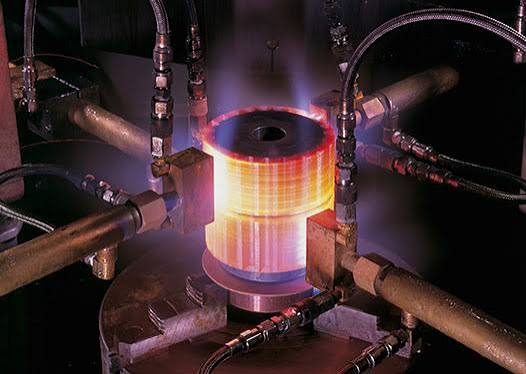
Heat Treatment vs Surface Hardening compares two powerful methods for improving metal performance, but neither is universally better. Heat treatment modifies properties throughout a component, while surface hardening primarily strengthens its outer layer. The correct choice depends on hardness, toughness, wear resistance, component geometry, material, and operating conditions. For manufacturers, engineers, and fabricators, making the wrong choice can cause premature wear, cracking, or costly component failure.
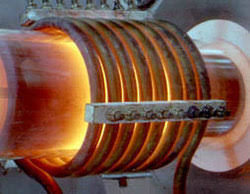
Heat treatment uses controlled heating, holding, and cooling to alter a metal’s microstructure and mechanical properties. Common processes include annealing, normalizing, hardening, and tempering. Surface hardening creates a hard exterior while retaining a tougher interior. This combination is especially valuable for components exposed to repeated friction, impact, pressure, or abrasion.
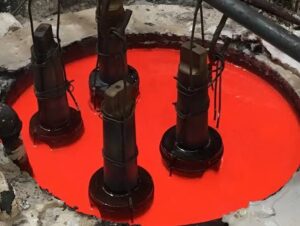

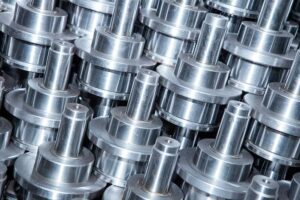


Understanding Heat Treatment
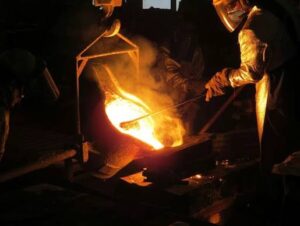
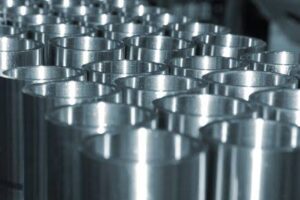
Heat treatment is a controlled manufacturing process designed to achieve specific mechanical and metallurgical properties. Depending on the material and objective, temperatures, soaking periods, and cooling rates are carefully controlled. Industrial applications include automotive components, mining equipment, railway parts, oil and gas equipment, energy systems, and heavy-duty machinery. Proper processing can improve strength, toughness, machinability, dimensional stability, and service life.
Different metals require different treatment schedules and process controls. Materials such as Grey Irons, Ductile Irons, High Chrome Irons, Ni-Hard Steels, Moly Chrome Steels, and Martensitic Steels respond differently to thermal processing. Stainless Steels (heat and corrosion resistant) and Manganese Steels also require carefully selected procedures. Reliable results depend on metallurgy, furnace control, quenching methods, and accurate verification.
Surface Hardening Explained
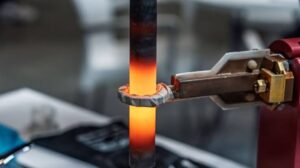
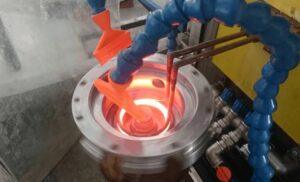
Surface hardening concentrates hardness near the component’s exterior while maintaining a comparatively tough core. Common methods include carburizing, nitriding, induction hardening, and flame hardening. The Case hardening process can introduce carbon into suitable steels before hardening the affected region. This produces a wear-resistant surface while preserving useful toughness underneath.
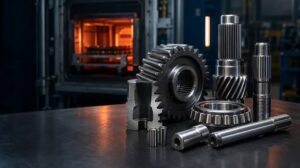
The Surface hardening process is valuable for gears, shafts, rollers, pins, bearings, dies, and other components. These parts often require resistance against abrasion and repeated contact without becoming excessively brittle throughout. Surface hardening of steel therefore provides an effective balance between surface durability and core toughness. The precise method should match the steel grade, geometry, hardness requirement, and service environment.
Heat Treatment vs Surface Hardening: Key Differences
The fundamental difference is where the property change occurs. Heat treatment can influence the component’s structure throughout its cross-section, while surface hardening primarily targets the exterior. Heat treatment is often selected when overall strength, toughness, or machinability must change. Surface hardening is preferred when surface wear resistance is the primary requirement.
A practical selection checklist includes:
- Overall strength: Consider conventional heat treatment.
- Surface wear: Consider surface hardening.
- Core toughness: Surface hardening can preserve a tougher interior.
- Component geometry: Complex shapes may influence process selection.
- Material grade: Not every alloy responds equally to every process.
- Production volume: Automated processing may improve consistency.
- Cost: Compare treatment, machining, inspection, energy, and replacement costs.
- Service conditions: Evaluate friction, impact, temperature, corrosion, and load.
Which Process Is Better for Industrial Components?
There is no universal winner in the Heat Treatment vs Surface Hardening debate. The best solution depends on the component’s engineering requirements and intended operating environment. A shaft requiring increased overall strength may benefit from conventional heat treatment. A gear experiencing intense tooth wear may require a hardened surface with a tougher core.
For demanding applications, processes may also be combined with precision machining and finishing. Vistacraft Builders provides professional metallurgical and engineering solutions for manufacturers seeking reliable performance across Nigeria and other African markets. Its capabilities support industrial requirements involving heat treatment, machining, finishing, and engineered component solutions.
Advanced Processing and Quality Control
Industrial heat treatment requires more than simply heating metal and cooling it afterward. Controlled melting, material selection, molding, and component preparation can influence final performance. Foundries producing iron and steel castings require appropriate melting facilities, moulding facilities, and core making facilities. Proper heat treatment facilities then help deliver consistent metallurgical properties.
Modern production can also support re-engineered parts and components manufactured to demanding specifications. Quality verification may involve Optical Emission Spectrometers to required metallurgical specifications. Industrial facilities can combine these capabilities with production of green sand moulds and processes designed to produce castings to international standard. Controlled Water, oil and air quenching facilities can further support appropriate cooling strategies.
Surface Hardening, Finishing, and Precision Manufacturing
Surface hardening should not be confused with surface finishing. Surface finishing primarily improves appearance, dimensional quality, roughness, corrosion resistance, or functional surface characteristics. Common Types of surface finishing process include polishing, grinding, plating, coating, blasting, and related treatments. Modern Surface finishing Technologies can complement heat treatment and hardening processes.
Engineers searching for Surface hardening process pdf, Heat treatment vs surface hardening pdf, or Heat treatment vs surface hardening ppt should focus on technical information relevant to the specific material. Generic process charts cannot replace engineering specifications. Professional facilities should verify hardness, microstructure, dimensional stability, and other required properties. This approach reduces the risk of expensive failures.
Industrial Applications Across Nigeria and Africa
These technologies support manufacturers and industrial users in Lagos, Abuja, Port Harcourt, Kaduna, Uyo, Asaba, Warri, Ibadan, Benin, Bonny Island, Enugu, and Kano. They are equally relevant to industrial operations across Accra, Cotonou, Lome, Abidjan, Monrovia, Freetown, Banjul, Cape Verde, and Dakar. Applications span automotive, construction, oil and gas, marine, mining, aerospace, medical, defense, railway, energy, power, and food processing. The correct treatment can improve durability, efficiency, and long-term component performance.
Specialist services may include Industrial Machine Shop Services, Precision CNC Machining Services, Metal Fabrication and Welding Services, and Precision Heat Treatment Services. Related capabilities can include Hydraulic Press Supplier in Nigeria, Injection Molding Services for Manufacturers, and Precision Laser Welding Services. These integrated services help manufacturers move from fabrication to finishing through coordinated production. Such an approach can reduce delays and simplify procurement.
Final Verdict
So, which is better in the Heat Treatment vs Surface Hardening comparison? Heat treatment is better when the entire component requires controlled changes in strength, toughness, or other bulk properties. Surface hardening is better when exceptional surface wear resistance is required without sacrificing core toughness. In demanding applications, the strongest solution may involve carefully combining both approaches.
Choosing correctly can deliver longer-lasting components, lower maintenance requirements, and more reliable industrial performance. Professional material evaluation should always precede treatment selection, especially for critical or heavy-duty components. The right process creates a powerful balance between hardness, toughness, durability, and performance. That is the foundation of successful modern metallurgy.
Frequently Asked Questions
What is the difference between heat treatment and surface hardening?
Heat treatment can modify properties throughout a component, while surface hardening primarily increases hardness near the exterior.
Is surface hardening a type of heat treatment?
Several surface-hardening methods use controlled heating and cooling, making them related to heat-treatment technology. However, their primary objective is localized surface property modification.
What is the best surface hardening method?
The best method depends on material, component geometry, required hardness depth, production volume, operating conditions, and desired performance.
What is the Case hardening process?
Case hardening modifies the outer layer of suitable steel to produce a hard, wear-resistant surface while maintaining a tougher core.
Can heat treatment improve castings?
Yes. Properly selected heat treatment can improve mechanical and metallurgical properties of suitable cast materials.
Does surface hardening increase component lifespan?
It can significantly improve wear resistance and service life when correctly designed, processed, and applied to suitable components.
What should engineers consider before choosing a process?
Engineers should evaluate material grade, hardness requirements, toughness, dimensions, operating loads, wear, temperature, corrosion, production volume, and total processing cost.
Ready to bring your engineering or construction project to life? Get in touch with Vistacraft Builders today.
🌐 Visit: www.vistacraftbuilders.com.ng
📧 Email: info@vistacraftbuilders.com.ng
📞 Call/WhatsApp: +234 911 416 6874
Vistacraft Builders — Engineering Innovation. Building Trust. Delivering Excellence.
At Vistacraft Builders, we provide – Interior designs – Paints, Painting & Screeding – Wall papers & murals, wall decors – Floors, Flooring & Ceilings – Carpentry & partitions – Electrical lightning & fittings – Plumbing & Toilets – Interior equipment – Renovations & Container Spaces – Protection & Security – Car interior – Machines & equipment Tech Devices & Gadgets (Tech Gear), Buy PlayStation VR In Nigeria, How Much Is Virtual Reality Game, Latest Apple VR Price In Nigeria, Best VR Headset For PC 2024, Latest VR Meta Quest 3 Headset, How Much Is Virtual Reality Game, Best VR Headset 2024, EChecker Smart Meters Nigeria, Pioneering Energy Management Solutions eChecker,
Revolutionizing Energy Management Rise eChecker, EChecker Nigeria Limited, EChecker Smart Energy Meter, Get EChecker Tetra 3 Meter, EChecker Apartment Meters In Nigeria, Smart Prepaid Electricity Meters In Nigeria, Smart Power Meter For Home In Nigeria 2024, Meter To Monitor Electricity Usage In Nigeria 2024, Best Home Electricity Monitor In Nigeria 2024, Energy Meter 3 Phase In Nigeria 2024, Gas Energy Monitor In Nigeria 2024, Smart Meter Energy Nigeria 2024, Luxe WPC Flute Panel, Interior WPC Wall Panels, Quality Fluted Panels In Nigeria, Fluted Panels Price In Nigeria, PU Veneer Stone Panels, Screeding, Beautiful Paintings, Licensed Electrician Wall Art, Wall Art Ideas, Paintings for Home
Light Gauge Steel, Light Gauge Steel: The Ultimate Guide to Stronger, Smarter & Cost-Effective Construction, Light Gauge Steel, Light Gauge Steel Guide Smarter, Light Gauge Steel Roofing: The Ultimate Solution for Durable Buildings, Cold Formed Steel Roof Trusses, Cold Formed Metal Trusses, CFS Roof Trusses, Installation of Light Gauge Steel Trusses, Light Gauge Steel Roofing, Drill Press vs Drill Machine,
Drill Press Vs Drill Machine: Which Should You Buy?, Drill Machine, Industrial Finishing, High-quality Industrial Finishing, Grinder Machine, Cutting Machine, Manufacturing Machines, How Smart Manufacturing Machines Increase Factory Productivity, Industrial Machines, The Best Industrial Machines Every Fabrication Shop Needs, CNC Machine, CNC Machine: The Intelligent Engine Behind Modern Manufacturing, CNC Machining, Laser Cutting Machines, Laser Cutting Machines Are Transforming Modern Manufacturing, MIG Welder, MIG Welder Explained: Why It Matters In Modern Fabrication, Light Gauge Steel, Light Gauge Steel Revolutionizing Modern Construction, Light Gauge Steel Trusses, Inside a Modern Machine Shop, Machining Explained, Precision Machining, Machining Techniques, Cold-Formed Steel Roof Trusses,
Cold Formed Steel Trusses, Cold Formed Metal Trusses, Iron and Steel Castings, Grey Irons, Molten Metal to Finished Product, Modern Melting Facilities, Re-Engineered Parts, Re-Engineered Industrial, Industrial Weights, Precision Industrial Weights, CNC Machine, CNC Machine Supplier, Industrial Laser Cutting and Welding, Industrial Laser Cutting Machine, Metal Fabrication and Welding, MIG Welder Price Guide, Injection Molding Services for Manufacturers, Injection Molding Services, Engineering Design and Structural Engineering, Industrial Machine Shop Services, Industrial Machine Shop Services, Professional Finishing, Precision Industrial Weights, Industrial Weights Buying Guide, Surface Finishing,