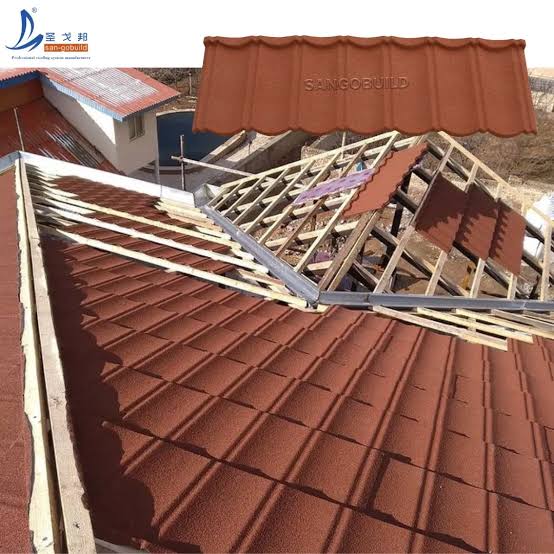
Re-roofing process: What It Means and Why It Matters
Re-roofing process is the planned replacement or renewal of an existing roof to restore protection, structural performance, appearance, and durability. It typically includes inspection, measurement, material selection, old-roof removal, structural repairs, installation, finishing, and quality checks. The right process can prevent leaks, reduce maintenance, improve safety, and extend the useful life of a building. For Nigerian properties, professional planning is especially important because intense sunlight, heavy rainfall, humidity, and wind can accelerate roof deterioration.
Unlike simple roof repairs, re-roofing addresses broader roofing-system problems and may involve replacing supporting components. It can benefit residential, commercial, and industrial buildings with aging, damaged, leaking, or structurally compromised roofs. Delaying necessary work can create expensive damage to ceilings, walls, insulation, electrical systems, and structural members. A properly managed project creates a stronger, cleaner, and more reliable roofing system.
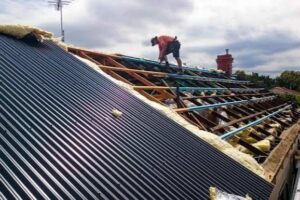
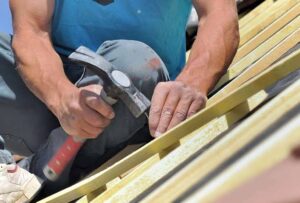
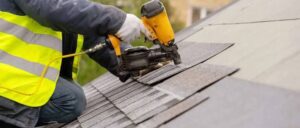
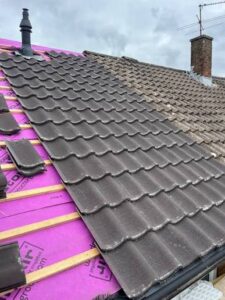
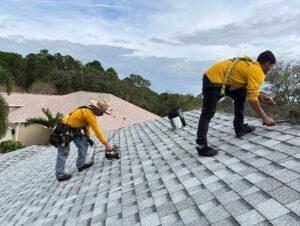
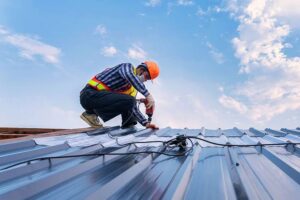
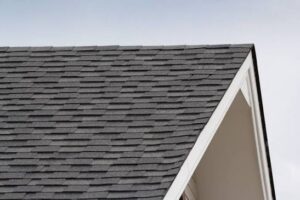
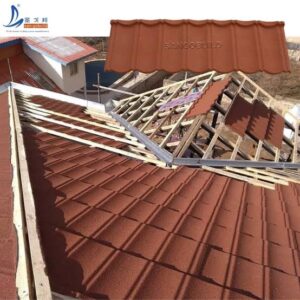
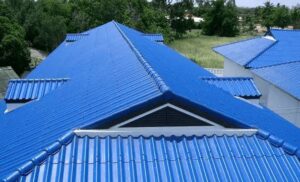
Understanding the Re-roofing process in Nigeria
The Re-roofing process in Nigeria begins with a professional assessment of the existing roof and supporting structure. A qualified contractor examines roof sheets, trusses, rafters, decking, flashing, gutters, fasteners, ventilation, and visible structural weaknesses. Measurements establish roof dimensions and provide the information needed for accurate material quantities and project estimates. This assessment determines whether repairs, partial replacement, or complete roof replacement represents the most practical solution.
The roofing material should then be selected according to building type, environmental exposure, architectural requirements, budget, and expected lifespan. Modern options include light gauged steel, light gauge steel trusses, and light gauge steel roofing for lightweight structural applications. Other engineered options include cold formed steel roof trusses, cold formed steel trusses, and cold formed metal trusses. Projects may also use cfs roof trusses, cold formed roof trusses, cold formed trusses, lgs deck framing, and prefabricated cold formed steel roof trusses.
What Does Roof Replacement Include?
A complete roof replacement can include much more than installing new sheets. The scope may cover inspection, measurements, engineering, dismantling, structural repairs, framework installation, roofing installation, flashing, drainage, waterproofing, ventilation, finishing, and cleanup. Understanding the scope helps property owners compare quotations accurately. It also reduces the risk of unpleasant surprises during construction.
The exact scope depends on the roof’s condition and the building’s requirements. Some properties require only new roofing sheets, while others require new trusses or extensive structural reinforcement. Damaged timber, corrosion, termite activity, inadequate connections, and previous construction errors can affect the project. Professional assessment therefore remains essential before finalizing a budget or installation schedule.
Step 1: Roof Inspection and Measurement
Every successful project starts with a thorough roof inspection. The contractor identifies leaks, sagging sections, cracked supports, rust, damaged sheets, deteriorated timber, blocked drainage, and weak connections. Measurements then determine roof area, pitch, sheet quantities, framework requirements, fastener quantities, and accessory requirements. These details create the foundation for an accurate project cost estimate.
A detailed inspection can reveal problems hidden beneath apparently acceptable roofing. Moisture may have weakened structural members, while termites may have damaged timber around concealed areas. Coastal environments can also accelerate corrosion when unsuitable materials are used. Addressing these issues before installation helps improve safety and prevent roof collapse.
Step 2: Choosing Materials and Preparing the Site
Material selection should balance performance, appearance, availability, maintenance, and total cost. Galvanized and zinc-coated steel products can provide useful corrosion protection when appropriately specified and installed. Lightweight, high-strength systems can also reduce structural loading while supporting faster installation. For premium projects, precision-engineered components can provide a sleek, modern, and beautifully finished appearance.
Before work begins, the site is prepared to protect occupants and property. Furniture, equipment, electrical systems, landscaping, and sensitive areas may require protective covering or relocation. Workers establish safe access routes and organize tools, materials, lifting equipment, and waste-management procedures. This preparation helps residential and commercial projects proceed efficiently without unnecessary disruption.
Step 3: Removing the Existing Roofing
The old roof is dismantled using a controlled sequence that prioritizes worker and property safety. Sheets, fasteners, damaged timber, insulation, and other obsolete components are removed according to the approved project plan. Reusable materials may be separated from construction waste where appropriate. Proper disposal keeps the site clean while supporting responsible construction practices.
Old roofing can reveal hidden problems once removed. Structural corrosion, termite damage, moisture penetration, inadequate support, or poor previous repairs may require additional work. These discoveries can change the Re roofing cost and project timeline. A reliable contractor should explain significant findings before proceeding with additional work.
Step 4: Structural Repairs and Framework Installation
After removal, the exposed structure is inspected again before new components are installed. Weak members are repaired or replaced, while connections are strengthened according to engineering requirements. Where appropriate, steel framing provides a durable alternative to deteriorated timber components. Professional fabrication and installation of light gauge steel trusses can also improve dimensional consistency.
Prefabricated components can reduce on-site cutting, drilling, and adjustment. This approach supports faster construction and can reduce labour requirements when project planning is accurate. Precision fabrication also helps components fit together more consistently during installation. The final result should be solid, robust, properly aligned, and suitable for the building’s intended loads.
Step 5: Roofing Installation Process
The Roofing installation process involves positioning roofing sheets or other coverings over the prepared structural framework. Installers follow approved specifications for alignment, overlaps, fasteners, flashings, ridges, valleys, and drainage details. Correct installation helps prevent water penetration and improves long-term weather performance. Workmanship is particularly important because even high-quality materials can fail when incorrectly installed.
Depending on architectural requirements, homeowners may select conventional metal roofing or stone-coated systems. Searches for Girard roofing, Gerald roofing sheet, Types of Gerard roofing sheet, and Gerard stone coated steel roofing often reflect interest in durable, attractive roofing solutions. Buyers should compare technical specifications, warranties, maintenance requirements, and installation quality. The cheapest option is not necessarily the most economical over the roof’s complete lifespan.
How Long Does Re-roofing Take?
The timeline depends on building size, roof complexity, structural condition, material availability, weather, accessibility, and workforce. A small bungalow can require significantly less time than a large warehouse, factory, hospital, shopping mall, or university. Simple projects may take several working days, while complex replacements can require several weeks. An accurate schedule becomes possible after inspection and detailed project planning.
A typical project sequence may look like this:
- Days 1–2: Inspection, measurements, design confirmation, and procurement.
- Days 2–4: Site preparation and removal of existing roofing.
- Days 3–6: Structural repairs and framework installation.
- Days 5–8: Roofing installation, flashing, drainage, and finishing.
- Final stage: Inspection, cleanup, corrections, and project handover.
Weather can affect these estimates, particularly during periods of heavy rainfall. Contractors should therefore include reasonable contingency time in the construction programme. Rushing installation to meet an unrealistic deadline can compromise workmanship and safety.
Re-roofing costs and Key Pricing Factors
Re-roofing costs in Nigeria vary according to roof area, material selection, labour, structural repairs, transportation, roof design, access, and site conditions. Material prices can change, so current quotations are more useful than outdated price lists. A Re roofing costs calculator may provide an initial estimate, but professional measurements produce a more dependable budget. Request a detailed quote that separates materials, labour, removal, repairs, transportation, and finishing.
Popular searches include Nigerite roofing sheet price list, How many bundle of zinc can roof 4 bedroom flat price, and How much to roof 3 bedroom flat in Nigeria. These questions are useful for initial research, but every building has different dimensions and roof designs. Similarly, How many wood can roof 3 bedroom flat in Nigeria depends on structural design and spacing requirements. The same principle applies when estimating the Cost of roofing a house in Nigeria 2026.
Re-roofing Across Nigeria’s Major Cities
Roofing requirements can vary across Lagos, Abuja, Port Harcourt, Kaduna, Uyo, Asaba, Warri, Ibadan, Benin, Bonny Island, Enugu, and Kano. Coastal locations may experience stronger humidity and salt exposure, while other areas may experience intense heat, dust, rainfall, or seasonal winds. Material selection should therefore consider environmental exposure alongside architectural requirements. Professional local assessment helps ensure the system is appropriate for its operating conditions.
Vistacraft Builders provides engineered roofing and Light Gauge Steel solutions for residential, commercial, and industrial applications across Nigeria. Its approach can integrate design, fabrication, material selection, installation, and project coordination. This makes it suitable for projects seeking durable, high-quality, and precision-built roofing systems. Professional expertise also helps property owners make informed decisions about materials, costs, maintenance, and expected lifespan.
Roof Repair Process vs Roof Replacement
The Roof repair process generally addresses localized problems such as damaged sheets, leaking joints, broken flashing, or isolated structural defects. Re-roofing becomes more appropriate when deterioration affects a substantial portion of the system. Repairing a severely aged roof repeatedly can become expensive without resolving underlying problems. A professional inspection should determine whether repair or replacement offers better long-term value.
The decision should consider structural condition, remaining lifespan, maintenance history, leakage frequency, material availability, and total ownership cost. A roof that repeatedly requires repairs may justify complete replacement. New roofing can improve appearance, weather resistance, safety, and maintenance performance. However, replacement should always follow proper structural assessment rather than appearance alone.
Roof Inspection After Installation
A Roof inspection after installation verifies that the completed system matches approved specifications. Inspectors should check sheet alignment, overlaps, fasteners, flashings, ridges, valleys, gutters, drainage, ventilation, and visible finishing details. They should also identify loose components or potential water-entry points. Correcting defects before handover is easier and less expensive than discovering them later.
Property owners should receive relevant project documentation where applicable. This may include material specifications, warranties, maintenance recommendations, completion records, and photographs. Such records help support future maintenance and repair decisions. They also provide useful information when the building changes ownership.
What to Know About Roof Replacement Before Starting
If you are asking What to know about roof replacement, begin with the building’s structural condition rather than the roofing sheet price. Ask whether existing trusses can remain, whether structural repairs are required, and which materials suit the environment. Confirm the installation scope, estimated timeline, payment schedule, safety procedures, and warranty terms. These questions provide a practical buyer’s checklist before work begins.
Many property owners also ask, Do roofers come in your house? Usually, roofers primarily work externally, but interior access may sometimes be necessary for inspection, leak tracing, ceiling assessment, or structural verification. Access requirements should be discussed before work starts. Clear communication helps protect privacy, property, schedules, and project expectations.
Conclusion
The Re-roofing process is a coordinated construction exercise that restores protection, improves durability, and modernizes an aging building. Inspection, material selection, structural preparation, professional installation, and final quality checks are all essential. A carefully planned project can reduce maintenance, improve safety, and provide stronger long-term value. Choosing experienced professionals also helps prevent expensive mistakes and unnecessary delays.
For homeowners and facility managers, the goal should not simply be the cheapest roof. The better objective is a reliable, durable, properly engineered system that matches the building, environment, budget, and expected lifespan. With the right materials and professional workmanship, re-roofing can be a powerful investment in the future of your property.
Frequently Asked Questions
1. What is the re-roofing process?
The Re-roofing process involves inspecting the existing roof, planning the project, removing old materials, repairing the structure, installing new roofing, finishing the system, and conducting final inspections.
2. How long does roof replacement take?
The timeline varies according to roof size, complexity, structural condition, weather, materials, and site access. Small projects can take several working days, while complex projects may require weeks.
3. What affects re-roofing costs in Nigeria?
Major factors include roof size, material type, labour, structural repairs, transportation, roof design, accessibility, and current material prices.
4. Can Light Gauge Steel be used for re-roofing?
Yes. light gauge steel trusses can provide lightweight, high-strength, durable structural support when properly designed, fabricated, protected, and installed.
5. When should I repair instead of replace my roof?
Localized damage may justify repairs, while widespread deterioration, recurring leaks, structural weakness, or advanced material aging may justify complete replacement.
Build stronger, faster, and smarter with Vistacraft Builder’s premium Light Gauge Steel solutions. From design and fabrication to professional installation, we deliver durable, precision-engineered steel trusses and roofing systems for residential, commercial, and industrial projects across Nigeria and West Africa. Partner with Vistacraft Builder—your trusted expert in Light Gauge Steel construction.
🌐 Visit: https://vistacraftbuilders.com.ng/
📲 Call/WhatsApp: +234 911 416 6874
📩 Email: info@vistacraftbuilders.com.ng
Vistacraft Builder — Quality You Can Trust. Durability You Can See.
At Vistacraft Builders, we provide – Interior designs – Paints, Painting & Screeding – Wall papers & murals, wall decors – Floors, Flooring & Ceilings – Carpentry & partitions – Electrical lightning & fittings – Plumbing & Toilets – Interior equipment – Renovations & Container Spaces – Protection & Security – Car interior – Machines & equipment Tech Devices & Gadgets (Tech Gear), Buy PlayStation VR In Nigeria, How Much Is Virtual Reality Game, Latest Apple VR Price In Nigeria, Best VR Headset For PC 2024, Latest VR Meta Quest 3 Headset, How Much Is Virtual Reality Game, Best VR Headset 2024, EChecker Smart Meters Nigeria, Pioneering Energy Management Solutions eChecker,
Revolutionizing Energy Management Rise eChecker, EChecker Nigeria Limited, EChecker Smart Energy Meter, Get EChecker Tetra 3 Meter, EChecker Apartment Meters In Nigeria, Smart Prepaid Electricity Meters In Nigeria, Smart Power Meter For Home In Nigeria 2024, Meter To Monitor Electricity Usage In Nigeria 2024, Best Home Electricity Monitor In Nigeria 2024, Energy Meter 3 Phase In Nigeria 2024, Gas Energy Monitor In Nigeria 2024, Smart Meter Energy Nigeria 2024, Luxe WPC Flute Panel, Interior WPC Wall Panels, Quality Fluted Panels In Nigeria, Fluted Panels Price In Nigeria, PU Veneer Stone Panels, Screeding, Beautiful Paintings, Licensed Electrician Wall Art, Wall Art Ideas, Paintings for Home
Light Gauge Steel, Light Gauge Steel: The Ultimate Guide to Stronger, Smarter & Cost-Effective Construction, Light Gauge Steel, Light Gauge Steel Guide Smarter, Light Gauge Steel Roofing: The Ultimate Solution for Durable Buildings, Cold Formed Steel Roof Trusses, Cold Formed Metal Trusses, CFS Roof Trusses, Installation of Light Gauge Steel Trusses, Light Gauge Steel Roofing, Drill Press vs Drill Machine,
Drill Press Vs Drill Machine: Which Should You Buy?, Drill Machine, Industrial Finishing, High-quality Industrial Finishing, Grinder Machine, Cutting Machine, Manufacturing Machines, How Smart Manufacturing Machines Increase Factory Productivity, Industrial Machines, The Best Industrial Machines Every Fabrication Shop Needs, CNC Machine, CNC Machine: The Intelligent Engine Behind Modern Manufacturing, CNC Machining, Laser Cutting Machines, Laser Cutting Machines Are Transforming Modern Manufacturing, MIG Welder, MIG Welder Explained: Why It Matters In Modern Fabrication, Light Gauge Steel, Light Gauge Steel Revolutionizing Modern Construction, Light Gauge Steel Trusses, Inside a Modern Machine Shop, Machining Explained, Precision Machining, Machining Techniques, Cold-Formed Steel Roof Trusses,
Cold Formed Steel Trusses, Cold Formed Metal Trusses, Iron and Steel Castings, Grey Irons, Molten Metal to Finished Product, Modern Melting Facilities, Re-Engineered Parts, Re-Engineered Industrial, Industrial Weights, Precision Industrial Weights, CNC Machine, CNC Machine Supplier, Industrial Laser Cutting and Welding, Industrial Laser Cutting Machine, Metal Fabrication and Welding, Cold Formed Trusses, Premium Light Gauge Steel, Light Gauge Steel Roofing, Cold Formed Steel Trusses, Fabrication and Installation of Light Gauge Steel, LGS Deck Framing, Prefabricated Cold Formed Steel Roof, Roofing Upgrade, Roofing Innovation in Nigeria, The Brilliant Future of Modern Roofing, Roof Replacement, Re-roofing vs roof repair, Project Management Promise, Project Management Promise2, professional re-roofing, Re-roofing costs,