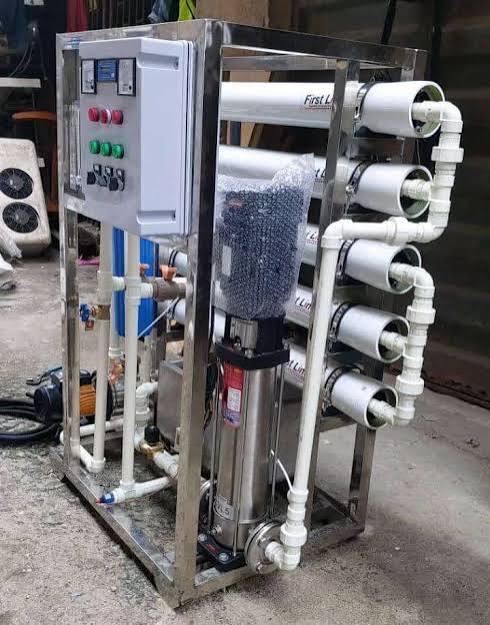
Reverse Osmosis Machine is a water-treatment system that uses pressure and a semi-permeable membrane to reduce many dissolved contaminants from water. It is particularly useful where high TDS, excessive minerals, salty water, or poor taste affect water quality. However, not every machine offers the same performance, capacity, or long-term value. Checking the right features before spending your money can prevent costly mistakes and help you choose a reliable solution.
A modern reverse osmosis system normally combines several treatment stages. These can include sediment filtration, carbon filtration, membrane purification, storage, and post-treatment. Some advanced systems add UV treatment, remineralization, pressure pumps, or automated controls. The best configuration depends on your source water, daily demand, available space, and intended application.
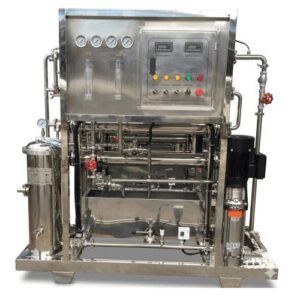
What Is a Reverse Osmosis Machine?
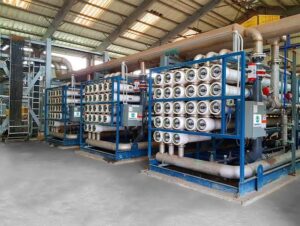
A Reverse Osmosis Machine uses pressure to move water through a semi-permeable reverse osmosis membrane. The membrane allows water to pass while reducing many dissolved salts, minerals, and other substances. Pre-filters help protect the membrane from sediment and chlorine. The treated water is then stored or delivered through a dedicated outlet.
This technology is different from basic sediment or carbon filtration. A reverse osmosis water filter can address dissolved substances that conventional filters may not adequately reduce. However, RO should not be treated as a universal solution for every contaminant. Water testing remains the most important first step before selecting equipment.
10 Smart Features to Check Before Buying
1. Check the RO Membrane Quality
The membrane is the heart of an RO system. Its quality influences purification performance, operating pressure, durability, and replacement intervals. Look for a reputable RO membrane with clearly stated specifications and compatibility with your feed water. Also consider the availability and RO membrane price before committing to a particular system.
A quality membrane is valuable only when properly protected. Excessive sediment, chlorine, iron, hardness, or other contaminants can shorten membrane life. This is why pre-treatment matters as much as the membrane itself. Ask the supplier about membrane protection and expected replacement requirements.
2. Examine the Pre-Filtration Stages
A good system should provide suitable protection before water reaches the membrane. Depending on the source water, this may include a sediment filter, carbon filter, iron filter, or other pre-treatment. A 5 stage reverse osmosis system commonly combines multiple filtration stages for household applications. Commercial installations may require considerably more robust pre-treatment.
If your source contains rusty water, visible particles, or heavy sediment, basic RO equipment may not be sufficient on its own. A dedicated water filter sediment stage can protect downstream components. Where iron is significant, an iron removal filter for water tank may be necessary. Proper sequencing can reduce maintenance problems later.
3. Confirm the Filtration Capacity
Capacity is one of the most overlooked specifications when comparing RO systems. A small home may need a compact system, while a hotel, restaurant, hospital, school, or factory may need much greater output. Specifications such as GPD indicate how much water the system is designed to produce under defined conditions. A 400 GPD RO system, for example, serves a different requirement from a large industrial plant.
Do not choose equipment simply because it has a high advertised capacity. Actual production depends on feed-water temperature, pressure, TDS, membrane condition, and system design. Ask for realistic operating performance rather than laboratory figures alone. This makes capacity comparisons more meaningful.
4. Look at the Pressure Pump
Water pressure directly affects RO performance. Where incoming pressure is inadequate, a pump may be required to maintain suitable membrane operating conditions. A properly selected pump can improve production and support consistent treatment. However, pump sizing should match the membrane and overall system design.
Ask about pump quality, energy consumption, noise, controls, and replacement availability. For commercial and industrial installations, pressure management becomes even more important. Poorly matched pumps can create unnecessary running costs or unstable operation. Professional installation helps avoid these problems.
5. Check Storage and Tank Pressure
Traditional domestic RO systems often use a storage tank, while newer designs can operate without one. Tank capacity should match household consumption and expected peak demand. A correctly maintained RO pressure tank helps ensure water is available when needed. Tankless designs may be preferable where space is limited.
Tank pressure also affects delivery performance. If pressure is incorrect, the faucet may produce water slowly or inconsistently. The tank should also be hygienically maintained. For larger systems, storage should be designed according to actual consumption rather than simply choosing the largest available tank.
6. Compare Filtration Stages Carefully
More stages do not automatically mean better water. Common configurations include 4 stage reverse osmosis system, 5 stage RO system, 6 stage RO system, and 7 stage RO system designs. Additional stages may provide carbon polishing, UV treatment, remineralization, or other functions. The important question is whether each stage solves a specific water-quality requirement.
For example, reverse osmosis with remineralization may improve the taste profile after membrane treatment. An RO UV water purifier can add ultraviolet treatment where microbial control is required. A system should be evaluated based on function rather than the number printed on the product label.
7. Consider TDS Monitoring and Controls
TDS monitoring can help users understand changes in dissolved-solids performance. Some modern systems provide digital displays, automatic alerts, filter-change indicators, or leak detection. These features can make maintenance more convenient. They are particularly useful for users who want a more transparent view of system operation.
However, digital features should not distract from core engineering. A sophisticated display cannot compensate for a poor membrane or unsuitable pre-treatment. Prioritize water quality, capacity, membrane performance, and serviceability first. Smart controls should complement sound treatment design.
8. Check Maintenance and Replacement Parts
A good RO system should be easy to maintain. Filters eventually require replacement, while membranes have a finite operating life. Ask how frequently components should be replaced under your water conditions. Also confirm whether replacement filters, membranes, pumps, housings, and other parts are readily available.
The cost of ownership includes more than the purchase price. Consider installation cost, replacement cost, maintenance cost, electricity, wastewater, and expected membrane life. A slightly more expensive system may become more cost-effective if components are durable and readily serviceable. This is an important part of any RO system cost comparison.
9. Match the Machine to the Application
Your application should determine your equipment. A residential system for drinking water differs from a commercial system for a restaurant or hotel. A factory, water-production facility, or hospital may need a high-capacity industrial reverse osmosis system. A home using borehole water may need pre-treatment before an RO system for well water.
Applications can include homes, offices, apartments, estates, churches, schools, restaurants, hospitals, factories, and pure-water businesses. Large-scale facilities may require automated controls, high-flow membranes, pumps, storage, and monitoring. Selecting equipment according to actual demand improves reliability. It also prevents paying for unnecessary capacity.
10. Evaluate the Supplier and Installation Support
The supplier is as important as the machine. A reliable provider should be able to assess your water, explain specifications, provide a clear quotation, install the equipment, and support future maintenance. Ask whether replacement parts and professional servicing are available. This can make a major difference after installation.
Vistacraft Builders provides water-treatment solutions designed around different residential, commercial, and industrial requirements. Its approach focuses on appropriate system selection, installation, and long-term serviceability. Customers can discuss source-water conditions and intended use before selecting equipment. This helps create a more informed and cost-effective purchase decision.
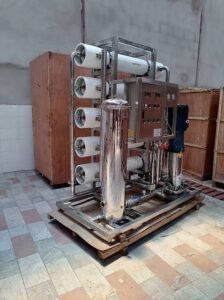
How to Choose the Best RO System for Your Needs
Start by testing your water rather than choosing equipment based solely on advertising. Identify TDS, hardness, iron, sediment, microbial concerns, and other relevant parameters. Then determine daily consumption and whether treatment is needed for drinking, cooking, production, or the entire property. These factors provide the foundation for choosing the correct system.
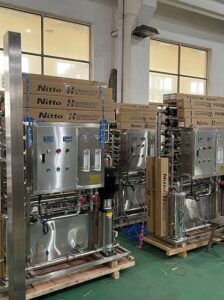
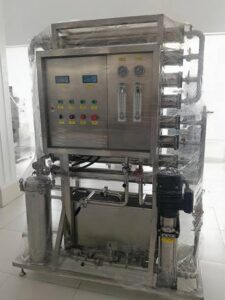
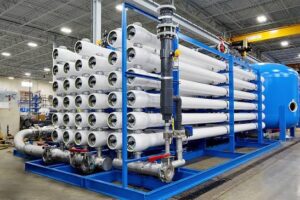
For domestic use, options include under sink reverse osmosis, countertop systems, tankless units, and larger residential installations. Commercial users may require a commercial reverse osmosis system, while industrial operations may need a high-capacity treatment plant. Whole-house applications require careful assessment of flow rate and operating economics. Professional system design becomes increasingly important as capacity increases.
Reverse Osmosis Machine Price: What Affects Cost?
The reverse osmosis machine price depends on membrane capacity, filtration stages, pump type, automation, storage, construction quality, installation requirements, and application. Domestic systems are generally simpler than commercial and industrial installations. Pre-treatment can also significantly affect the total project cost. Therefore, comparing prices without comparing specifications can be misleading.
Ask for a complete cost breakdown covering equipment, installation, commissioning, replacement components, maintenance, and expected running costs. This provides a clearer picture of total ownership. The cheapest system may not be the most affordable over several years. Value should be judged by performance, durability, serviceability, and suitability.
Common Mistakes to Avoid
One common mistake is buying an RO machine without testing the source water. Another is choosing the highest number of stages without understanding what each stage does. Ignoring pressure requirements, membrane replacement, and pre-treatment can also create expensive problems. These issues can reduce performance and shorten equipment life.
Avoid treating RO as a substitute for every other water-treatment technology. Severe iron, sediment, hardness, or microbial problems may require additional treatment. A professional assessment can identify the appropriate combination of technologies. This is usually safer and more economical than guessing.
Reverse Osmosis Solutions Across Nigeria and West Africa
Demand for advanced water treatment extends across Nigeria, including Lagos, Abuja, Port Harcourt, Kaduna, Uyo, Asaba, Warri, Ibadan, Benin, Enugu, Kano, Jos, Sokoto, Minna, Zaria, Katsina, Dutse, Maiduguri, Gombe, Bauchi, Yola, Jalingo, Makurdi, Abakaliki, Awka, Onitsha, Owerri, Umuahia, Abeokuta, Ilorin, Lokoja, Akure, Oshogbo, Ekiti, and Ile-Ife. Applications also extend through Bonny Island, Rivers State, Akwa Ibom State, Delta State, and Edo State. Areas such as Suleja – Niger State, Karu – Nasarawa State, Mararaba – Nasarawa State, Keffi – Nasarawa State, Gurara – Niger State, Zuba – FCT, Gwagwalada – FCT, Kuje – FCT, Bwari – FCT, and Abaji – FCT also present diverse water-treatment requirements.
Across West Africa, systems are relevant in Accra, Kumasi, Cotonou, Lomé, Abidjan, Monrovia, Freetown, Banjul, Cape Verde, and Dakar. Water conditions can vary considerably between communities and properties. Therefore, geographic relevance should support, not replace, actual water testing. The final system specification should always reflect the local water source and intended application.
Frequently Asked Questions
What is a Reverse Osmosis Machine?
A Reverse Osmosis Machine uses pressure and a semi-permeable membrane to reduce many dissolved substances from water. It normally works with pre-filtration and may include post-treatment.
Is reverse osmosis good for borehole water?
Yes, but borehole water should be tested first. Sediment, iron, hardness, high TDS, and other conditions may require pre-treatment before RO.
How many stages should an RO system have?
There is no universal answer. Four-, five-, six-, and seven-stage systems are available, but the correct configuration depends on water quality and application.
Is a more expensive RO machine better?
Not necessarily. The best system is the one that matches your water quality, capacity requirements, installation conditions, maintenance needs, and budget.
How often should RO filters be replaced?
Replacement intervals depend on source-water quality, usage, filter type, and manufacturer recommendations. Regular monitoring helps determine when servicing is required.
Can RO be used for commercial water production?
Yes. Commercial and industrial RO systems can be designed for larger water-treatment requirements, including restaurants, hotels, factories, hospitals, and water-production facilities.Conclusion
Buying a Reverse Osmosis Machine should begin with water testing, not price comparison. The most important factors include membrane quality, pre-filtration, capacity, pressure, storage, controls, maintenance, replacement parts, and supplier support. A smart purchase matches the machine to the actual water problem and intended application. This approach can deliver cleaner water while avoiding unnecessary costs and disappointing performance.
Get Your Water Treatment Solution!
🌐 Visit: www.vistacraftbuilders.com.ng 📧 Email: info@vistacraftbuilders.com.ng 📞 Call/WhatsApp: +234 911 416 6874
Vistacraft Builders — Building Quality. Creating Lasting Value. At Vistacraft Builders, we provide – Portable Toilets in Nigeria, Portable Toilets Price in Nigeria, Mobile Toilet for Hire, Building Site Toilet Hire, Portable Toilets for Elderly Users, Medical Portable Toilets, Portable Toilets for RVs, FRP Portable Toilet, Readymade Toilet and Bathroom, Emergency Portable Toilet Rental, Portable Toilet Business in Nigeria, Portable Toilet Rental Cost, Portable Chemical Toilet vs Flush Toilet, Camco Portable Toilet, Portable Sink and Toilet, Portable Toilet Price in Nigeria, Portable Toilets for Sale in Nigeria, Portable Toilet Suppliers in Nigeria, Water Filter and Purifier for Tank, Water Purifier in Nigeria, Reverse Osmosis Explained, RO Water Purifier, Reverse Osmosis Machine,