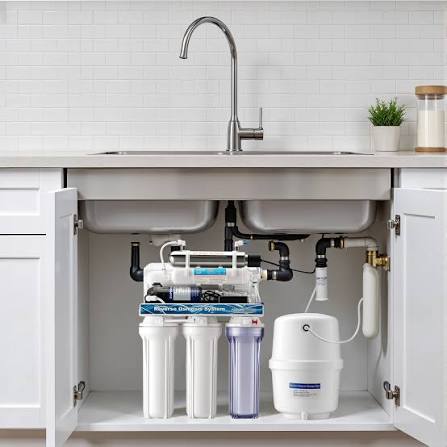
RO Technology in Water Purifiers uses pressure and a semi-permeable membrane to reduce many dissolved contaminants from water. It is an advanced purification method for improving water affected by high TDS, salts, unpleasant taste, and certain dissolved impurities. The technology combines membrane separation with supporting filtration stages to produce cleaner and more consistent water. For homes, offices, hotels, hospitals, schools, and production facilities, understanding how RO works helps buyers choose the right system.
What Is RO Technology in Water Purifiers?
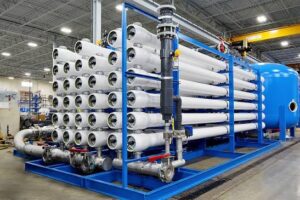
RO Technology in Water Purifiers is a membrane-based treatment process commonly known as reverse osmosis. Water is pushed under pressure through a specialised ro membrane, while many dissolved substances are rejected. Before reaching the membrane, water usually passes through sediment and carbon filters. The purified water can then receive additional treatment through remineralization, UV, or polishing filters.
Unlike basic filtration, reverse osmosis filtration can address many dissolved substances that ordinary sediment filters cannot remove. This makes RO useful for selected borehole, well, municipal, and commercial water applications. However, no purification technology should be selected blindly. Proper water testing helps determine whether RO is necessary and what pre-treatment the system requires.
8 Powerful Ways RO Delivers Cleaner Water
1. RO Technology in Water Purifiers Targets Dissolved Contaminants
The first major advantage is membrane separation. A reverse osmosis water filter forces water through an extremely fine membrane under controlled pressure. Many dissolved salts, minerals, and other unwanted substances are retained instead of passing into the treated water.
This makes RO particularly useful where water has high TDS or mineral-heavy characteristics. It can also improve certain taste and odour problems associated with dissolved substances. The actual performance depends on membrane quality, pressure, temperature, feed-water composition, and system design.
2. Pre-Filtration Protects the RO System
An effective RO installation normally begins with pre-treatment. A sediment filter can reduce sand, rust, silt, and suspended particles before water reaches the membrane. Activated carbon can also help reduce chlorine and certain compounds that could affect membrane performance.
For borehole or well water, additional pre-treatment may sometimes be required. Iron, hardness, scaling, and other water-quality problems can reduce system efficiency. A Water Filter and Purifier for tank can also support better water quality where treated or untreated water is stored.
3. Pressure Makes the Membrane Work
RO depends on sufficient pressure to move water through the membrane. When incoming pressure is inadequate, a dedicated pump can help maintain the required operating conditions. The pump, membrane housing, storage system, and controls must work together.
Pressure also influences production capacity and recovery. A professionally specified ro system should therefore consider source pressure, water temperature, TDS, daily demand, and required output. Simply buying the cheapest reverse osmosis machine can create performance and maintenance problems later.
4. Different Applications Require Different Systems
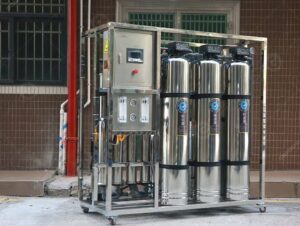
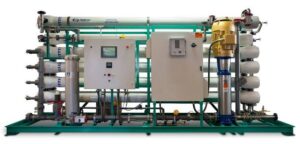
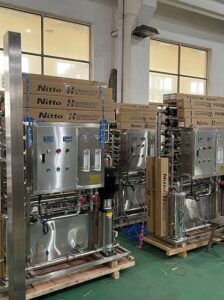
There is no universal “best” RO system. A household may need an under sink reverse osmosis unit, while a restaurant may require a commercial reverse osmosis system. A factory or water-production business could need an industrial reverse osmosis system with higher capacity and more extensive pre-treatment.
Residential options include countertop, under-counter, tankless, and storage-tank configurations. Larger properties may require a whole house reverse osmosis system or additional treatment equipment. The correct choice depends on water quality, consumption, space, budget, and required production capacity.
5. RO Can Improve Challenging Water
Some water sources contain characteristics that make ordinary filtration insufficient. These can include high TDS, salty water, mineral-heavy water, unpleasant taste, or specific dissolved contaminants. In such situations, reverse osmosis water treatment may provide a more advanced treatment pathway.
Borehole and well water should be tested before equipment selection. Testing can reveal whether sediment, iron, hardness, salinity, or other issues require additional treatment. This prevents costly mistakes caused by installing an unsuitable RO system.
6. Additional Treatment Can Refine the Final Water
RO does not have to operate as a standalone technology. Some systems combine RO with carbon filtration, UV treatment, or remineralization. A remineralization filter can be added after RO when the desired drinking-water specification calls for mineral adjustment.
A reverse osmosis with remineralization system may therefore be suitable for certain drinking-water applications. Similarly, reverse osmosis with UV light can provide an additional treatment stage where appropriate. These options should be selected according to water analysis rather than simply adding more components.
7. Proper Maintenance Protects Performance
Even advanced purification equipment requires regular servicing. Sediment and carbon filters eventually become exhausted and require replacement. The RO membrane also has a service life influenced by water quality, usage, pressure, and pre-treatment.
A practical maintenance guide should include filter replacement, membrane inspection, system sanitisation, pressure checks, tank cleaning, and leak inspection. Buyers should confirm the availability of genuine replacement parts before purchasing. A low-maintenance system is valuable only when its critical components remain accessible.
8. Correct System Design Creates Reliable Results
The final advantage is proper system matching. A reverse osmosis system for home may have very different specifications from equipment designed for a hotel, hospital, factory, or water-production facility. Capacity, filtration stages, pump requirements, membrane type, storage, and controls should all reflect the intended application.
For example, a 5 stage reverse osmosis system can combine sediment, carbon, membrane, and post-treatment stages. Larger installations may require 6-stage or 7-stage configurations, depending on the treatment objective. More stages do not automatically mean better water because design quality remains the critical factor.
RO vs Traditional Water Filtration
Traditional filtration and RO perform different functions. Sediment filtration primarily removes suspended particles, while carbon filtration can improve taste and reduce certain chemical compounds. RO adds membrane separation that targets many dissolved substances.
Therefore, the question is not simply whether RO is “better.” The right solution depends on the water-quality problem. A household with clean municipal water may require simpler treatment, while high-TDS borehole water may justify advanced RO treatment.
RO System Price and Total Cost
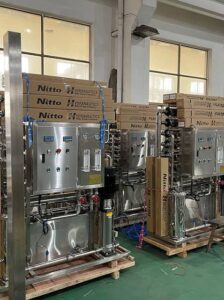
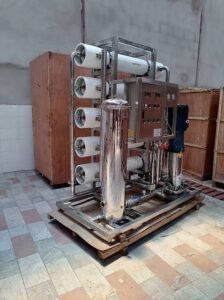
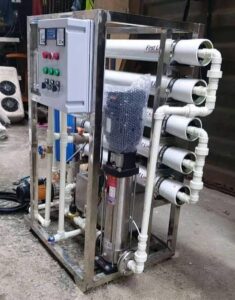
The reverse osmosis system price varies according to capacity, membrane quality, filtration stages, pump specifications, automation, storage, and installation requirements. Residential systems generally have a different cost structure from commercial and industrial equipment. The equipment price alone does not reveal the actual cost of ownership.
Consider installation cost, replacement cost, maintenance cost, electricity consumption, water recovery, and replacement-part availability. For commercial projects, request a detailed quotation with equipment specifications and a cost breakdown. This makes price comparison more meaningful and helps determine whether the investment is genuinely cost-effective.
How to Choose the Right RO System
Start with a water test before comparing brands or prices. Identify the source, daily consumption, required output quality, available installation space, and intended application. Then determine whether you need a residential, commercial, industrial, countertop, under-sink, tankless, or whole-house configuration.
Check the ro membrane, membrane housing, pump, filtration capacity, storage, controls, and maintenance requirements. Also confirm professional installation, warranty terms, replacement parts, and after-sales service. These factors provide a more reliable buying guide than online claims about the “best” RO purifier.
Common Mistakes to Avoid
One common mistake is choosing an RO unit without analysing the source water. Another is assuming that seven filtration stages automatically outperform five stages. Buyers can also overlook pressure requirements, membrane replacement, water wastage, and long-term maintenance.
Be cautious about unclear specifications and unusually low prices. A trusted supplier should explain system limitations, expected capacity, maintenance requirements, and installation conditions. Professional advice is especially important for commercial and industrial projects where treatment failure can affect business operations.
Applications Across Nigeria and Africa
Water-treatment requirements vary across Nigeria, from Lagos, Abuja, and Port Harcourt to Kaduna, Kano, Ibadan, Enugu, Benin, Uyo, Asaba, and Warri. Similar needs occur in Jos, Sokoto, Minna, Zaria, Katsina, Dutse, Maiduguri, Gombe, Bauchi, Yola, Jalingo, and Makurdi. Industrial and commercial requirements can also arise around Bonny Island, Rivers State, Akwa Ibom State, Delta State, and Edo State.
Treatment needs extend across Abeokuta, Ogun State, Ilorin, Lokoja, Akure, Oshogbo, Ekiti, and Ile-Ife. Across West Africa, applications can be found in Accra, Kumasi, Cotonou, Lomé, Abidjan, Monrovia, Freetown, Banjul, Cape Verde, and Dakar. Each market can present different water sources and treatment challenges.
Vistacraft Builders provides water-treatment solutions for residential, commercial, and industrial applications. Its approach focuses on matching filtration technology, capacity, installation, and maintenance requirements to the specific project. This helps clients avoid unnecessary equipment costs while achieving appropriate treatment performance.
Frequently Asked Questions
What does RO Technology in Water Purifiers mean?
RO Technology in Water Purifiers uses pressure to move water through a semi-permeable membrane. The membrane reduces many dissolved substances while supporting cleaner and more consistent water quality.
Is RO suitable for borehole water?
RO can be suitable for borehole water, but testing should come first. Sediment, iron, hardness, salinity, and other characteristics may require pre-treatment.
Is a 5-stage RO system better than a 7-stage system?
Not automatically. The correct number of stages depends on the source water, treatment objectives, membrane requirements, and desired output quality.
Does RO remove minerals?
RO can reduce many dissolved minerals and salts. Some drinking-water systems therefore use remineralization after membrane treatment.
How much does an RO system cost?
The cost depends on capacity, specifications, membrane quality, installation, automation, storage, and application. Commercial and industrial systems generally require more extensive equipment.
Is RO worth the investment?
RO can be worthwhile when advanced dissolved-contaminant reduction is required. The decision should consider water quality, demand, operating cost, maintenance, and system lifespan.
Conclusion
RO Technology in Water Purifiers provides a powerful membrane-based approach to improving water quality. Its effectiveness depends on suitable pre-treatment, adequate pressure, quality components, correct sizing, and consistent maintenance. The best system is not necessarily the most expensive or the one with the most filtration stages. It is the system designed around the actual water source, consumption requirements, treatment objectives, and long-term operating conditions.Get Your Water Treatment Solution!
🌐 Visit: www.vistacraftbuilders.com.ng 📧 Email: info@vistacraftbuilders.com.ng 📞 Call/WhatsApp: +234 911 416 6874
Vistacraft Builders — Building Quality. Creating Lasting Value. At Vistacraft Builders, we provide – Portable Toilets in Nigeria, Portable Toilets Price in Nigeria, Mobile Toilet for Hire, Building Site Toilet Hire, Portable Toilets for Elderly Users, Medical Portable Toilets, Portable Toilets for RVs, FRP Portable Toilet, Readymade Toilet and Bathroom, Emergency Portable Toilet Rental, Portable Toilet Business in Nigeria, Portable Toilet Rental Cost, Portable Chemical Toilet vs Flush Toilet, Camco Portable Toilet, Portable Sink and Toilet, Portable Toilet Price in Nigeria, Portable Toilets for Sale in Nigeria, Portable Toilet Suppliers in Nigeria, Water Filter and Purifier for Tank, Water Purifier in Nigeria, Reverse Osmosis Explained, RO Water Purifier, Reverse Osmosis Machine, RO Technology in Water Purifiers,