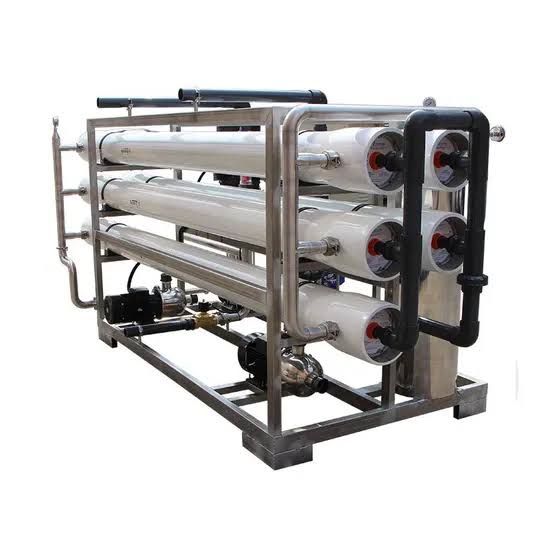
Reverse Osmosis Water Treatment is an advanced purification process that uses pressure and a semi-permeable membrane to reduce dissolved contaminants from water. It can improve taste, clarity, odour, and overall water quality when correctly designed. The technology is useful for homes, offices, hotels, hospitals, restaurants, schools, factories, estates, and commercial water production. For challenging borehole or well water, a properly specified RO system can provide a powerful and reliable treatment solution.
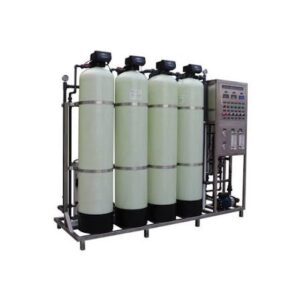
What Is Reverse Osmosis Water Treatment?
Reverse Osmosis Water Treatment works by forcing water through a specialized reverse osmosis membrane under controlled pressure. The membrane allows water molecules through while restricting many dissolved salts, minerals, and other contaminants. Pre-treatment commonly removes sediment, chlorine, and other substances before water reaches the membrane. Additional stages can include carbon filtration, UV treatment, softening, or remineralization.
A typical system follows a step-by-step process from pre-filtration to membrane separation and post-treatment. Sediment filters capture suspended particles, while carbon filters help reduce chlorine and certain taste and odour compounds. The reverse osmosis or RO as is popularly called, membrane then performs the primary dissolved-contaminant reduction. Depending on the design, treated water can enter a storage tank or flow directly from a tankless system.
10 Powerful Benefits of Reverse Osmosis Water Treatment
1. Reduces Dissolved Contaminants
The most important advantage of Reverse Osmosis Water Treatment is its ability to reduce many dissolved contaminants. Conventional sediment filters cannot address every substance dissolved within water. RO provides a deeper purification stage for water affected by high TDS, salinity, or excessive mineral content. This makes it valuable for drinking water and other applications requiring improved water quality.
2. Improves Taste, Clarity, and Odour
Cloudy water, unpleasant smells, and bad-tasting water can make people reluctant to drink it. A properly designed reverse osmosis water filter can improve several of these sensory characteristics. Sediment and carbon filtration support the membrane by removing particles and selected compounds. The resulting water can feel cleaner, clearer, and more refreshing.
3. Helps Treat Borehole and Well Water
Borehole water and well water can contain sediment, iron, hardness, salts, and other contaminants. A reverse osmosis system for well water can therefore form part of a broader treatment strategy. Pre-treatment may require iron removal, sediment filtration, softening, or other conditioning. Water testing should guide the design because no single RO configuration suits every source.
4. Offers Flexible System Types
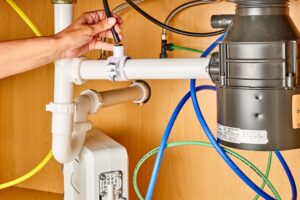
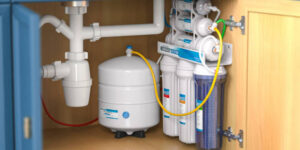
RO systems come in different sizes and configurations for different applications. A homeowner may choose under sink reverse osmosis or countertop reverse osmosis for drinking water. Larger properties may require a whole house reverse osmosis system, while businesses can use commercial or industrial equipment. Portable systems can also support temporary, mobile, or specialized applications.
5. Supports Multiple Filtration Stages
RO systems can combine several treatment stages according to water conditions and application requirements. Options include a 4 stage reverse osmosis system, 5 stage reverse osmosis system, 6 stage reverse osmosis system, or 7 stage reverse osmosis system. Typical stages include sediment, carbon, RO membrane, and post-treatment filtration. More stages do not automatically mean better performance because correct system design matters more than stage count.
6. Can Include Advanced Features
Modern systems can include several advanced features for improved performance and convenience. A ro uv water purifier combines RO with ultraviolet treatment, while reverse osmosis with remineralization adds a post-treatment mineral stage. Other configurations can include a pressure pump, storage tank, TDS monitoring, water softener, or UV light. The correct features depend on water analysis, usage, budget, and treatment objectives.
7. Provides Scalable Commercial Solutions
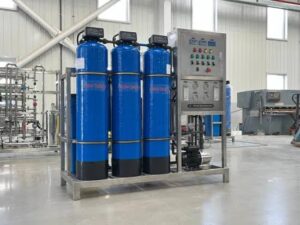
Commercial users require different capacities from households. Restaurants, hotels, hospitals, schools, churches, estates, and production facilities may require high-flow systems. A 400 gpd ro system may suit some smaller operations, while larger facilities may require commercial or industrial RO plants. Capacity should be calculated from daily consumption, peak demand, source-water quality, and required production volume.
8. Supports Pure Water Production
RO is widely applicable to commercial water production when integrated into a properly engineered treatment line. A reverse osmosis water treatment system can work alongside pre-treatment, storage, disinfection, and post-treatment equipment. Production capacity, membrane specifications, operating pressure, and maintenance requirements should be considered before equipment selection. This approach helps businesses build a more dependable water-production process.
9. Works as Part of a Complete Treatment System
RO does not always need to operate alone. A complete treatment plant may combine sediment filtration, carbon filtration, iron removal, softening, RO, UV, and remineralization. For example, an iron filter for water tank can address iron before water reaches the membrane. A sand filter for home water tank can also provide useful pre-treatment where suspended particles are significant.
10. Delivers Long-Term Value With Maintenance
An RO system performs best when filters, membranes, pumps, and other components receive appropriate maintenance. Changing reverse osmosis filters helps prevent excessive pressure loss and declining filtration performance. Membranes eventually require replacement, depending on water quality, usage, and pre-treatment. A proper maintenance guide should therefore include inspection, filter replacement, membrane monitoring, sanitization, and troubleshooting.
Reverse Osmosis Water Treatment Buying Guide
Choosing the best RO system starts with testing the source water. The analysis should consider TDS, hardness, iron, sediment, salinity, microbial concerns, and other relevant water-quality indicators. Next, determine daily water demand, peak flow requirements, storage needs, available pressure, and installation space. These factors are more useful than choosing equipment based only on advertised capacity or price.
Buyers should compare membrane specifications, pump performance, filtration stages, GPD capacity, replacement-part availability, warranty terms, installation requirements, and maintenance support. The total cost includes equipment, installation cost, electricity, filter replacement, membrane replacement, servicing, and running costs. Therefore, the cheapest ro water purifier price may not represent the lowest long-term cost. A reliable supplier should provide clear specifications, quotation details, professional installation, and after-sales support.
RO System Options for Different Applications
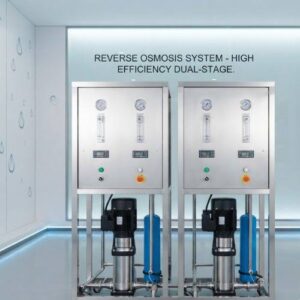
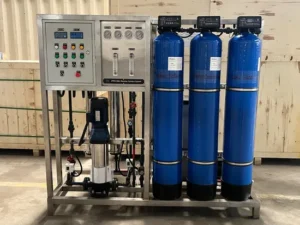
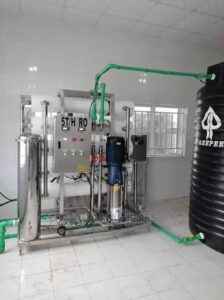
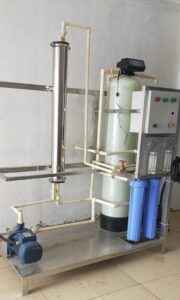
A compact ro water purifier for home can provide treated drinking water for a family. A commercial reverse osmosis system can support restaurants, hotels, offices, hospitals, and schools. An industrial reverse osmosis system is better suited to factories, large production facilities, and high-capacity treatment plants. Whole-house systems require substantially more capacity than point-of-use units.
Popular configurations include tankless reverse osmosis system, under sink reverse osmosis system, countertop reverse osmosis system, and larger whole-home installations. Systems can also incorporate reverse osmosis and carbon filter, remineralization, UV, pressure tanks, or water softeners. The right choice depends on actual water conditions and intended use. Professional assessment can prevent costly equipment mismatches.
Common Problems and Costly Mistakes
Common RO problems include low pressure, slow production, leaks, unpleasant taste, premature membrane failure, and excessive wastewater. These problems can result from poor pre-treatment, incorrect installation, inadequate pressure, neglected maintenance, or unsuitable components. Another common mistake is purchasing a system without testing the water first. Proper diagnosis can reduce avoidable replacement costs and improve system performance.
The cost of reverse osmosis system installation varies according to capacity, treatment stages, equipment quality, site conditions, and application. Residential systems generally require less infrastructure than commercial or industrial plants. Membrane replacement, filter replacement, electricity, servicing, and water usage also affect total ownership cost. A professional price comparison should therefore consider lifecycle costs rather than equipment price alone.
Regional RO Applications Across Nigeria and Africa
Water-quality challenges differ across communities, making local assessment important. RO systems can serve homes and businesses in Lagos, Abuja, Port Harcourt, Kaduna, Uyo, Asaba, Warri, Ibadan, Benin, Bonny Island, Enugu, Kano, and Jos. Applications also extend to Suleja, Karu, Mararaba, Keffi, Gurara, Zuba, Gwagwalada, Kuje, Bwari, and Abaji. Further demand exists across Sokoto, Minna, Zaria, Katsina, Dutse, Maiduguri, Gombe, Bauchi, Yola, and Jalingo.
Treatment requirements also apply in Makurdi, Abakaliki, Awka, Onitsha, Owerri, Umuahia, Rivers State, Akwa Ibom State, Delta State, Edo State, Abeokuta, Ogun State, Ilorin, Lokoja, Akure, Oshogbo, Ekiti, and Ile-Ife. Across West Africa, commercial and residential opportunities exist in Accra, Kumasi, Cotonou, Lomé, Abidjan, Monrovia, Freetown, Banjul, Cape Verde, and Dakar. However, geography alone cannot determine the correct equipment. Water testing remains the essential starting point for a reliable treatment design.
Why Choose Vistacraft Builders?
Vistacraft Builders provides professional water-treatment solutions designed around source-water conditions, application requirements, and expected capacity. Its approach covers residential, commercial, institutional, and industrial requirements across Nigeria and other African markets. The emphasis is on appropriate system specifications, quality components, professional installation, and practical maintenance support. This positions Vistacraft Builders as a credible provider for organizations seeking dependable water-treatment infrastructure.
When comparing reverse osmosis companies, buyers should evaluate technical expertise, equipment quality, installation capability, replacement support, and after-sales service. A trusted provider should explain the treatment process clearly and recommend equipment based on actual water conditions. Vistacraft Builders approaches RO as an engineered water-quality solution rather than simply selling equipment. That approach can provide stronger long-term value and more predictable performance.
Frequently Asked Questions
Is RO suitable for borehole water?
Yes, but borehole water should be tested before selecting equipment. Sediment, iron, hardness, high TDS, and other conditions may require pre-treatment.
What is the difference between RO and ordinary filtration?
Ordinary filtration typically targets specific particles or compounds. RO uses pressure and a semi-permeable membrane to reduce many dissolved substances.
Is a 5-stage RO system better than a 4-stage system?
Not automatically. The appropriate configuration depends on source-water quality, treatment objectives, required capacity, and post-treatment needs.
How often should RO filters be replaced?
Replacement depends on water quality, consumption, filter type, and manufacturer recommendations. Monitoring pressure and water quality helps determine appropriate replacement timing.
Is reverse osmosis worth the investment?
RO can be worthwhile when dissolved contaminants, high TDS, salinity, or other water-quality challenges require advanced treatment. Proper sizing is essential for value.Conclusion
Reverse Osmosis Water Treatment provides a powerful way to address many water-quality challenges when conventional filtration is insufficient. Its effectiveness depends on proper water testing, system sizing, quality components, correct installation, and consistent maintenance. From household drinking water to commercial and industrial production, RO can be adapted to different requirements. Choosing the right system can deliver cleaner, safer, and more valuable water for years.
Get Your Water Treatment Solution!
🌐 Visit: www.vistacraftbuilders.com.ng 📧 Email: info@vistacraftbuilders.com.ng 📞 Call/WhatsApp: +234 911 416 6874
Vistacraft Builders — Building Quality. Creating Lasting Value. At Vistacraft Builders, we provide – Portable Toilets in Nigeria, Portable Toilets Price in Nigeria, Mobile Toilet for Hire, Building Site Toilet Hire, Portable Toilets for Elderly Users, Medical Portable Toilets, Portable Toilets for RVs, FRP Portable Toilet, Readymade Toilet and Bathroom, Emergency Portable Toilet Rental, Portable Toilet Business in Nigeria, Portable Toilet Rental Cost, Portable Chemical Toilet vs Flush Toilet, Camco Portable Toilet, Portable Sink and Toilet, Portable Toilet Price in Nigeria, Portable Toilets for Sale in Nigeria, Portable Toilet Suppliers in Nigeria, Water Filter and Purifier for Tank, Water Purifier in Nigeria, Reverse Osmosis Explained, RO Water Purifier, Reverse Osmosis Machine, RO Technology in Water, Reverse Osmosis Water Treatment