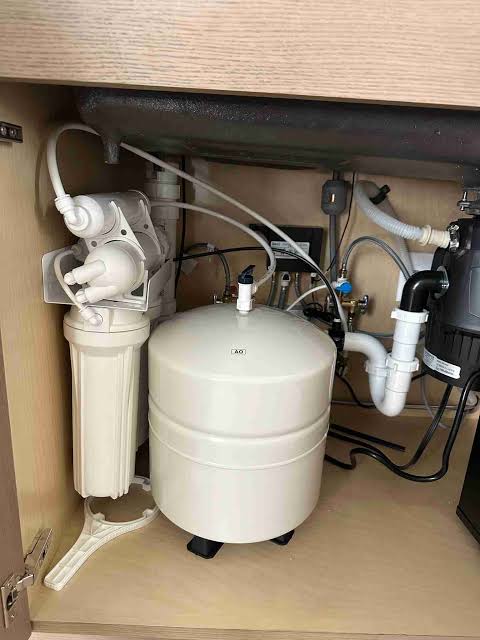
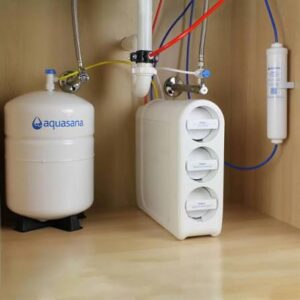
Under Sink Reverse Osmosis System technology is a point-of-use water purification solution installed beneath a kitchen sink. It uses pressure and a semi-permeable ro membrane to reduce many dissolved impurities and unwanted substances. Water passes through several stages before reaching a dedicated reverse osmosis tap for drinking and cooking. The result can be cleaner-tasting, clearer, and more refreshing water without occupying valuable countertop space.
For households facing high TDS, unpleasant smell, sediment, salty water, or poor water quality, this technology offers a powerful solution. It can treat suitable municipal, borehole water, or well water after appropriate pre-treatment. A typical system may include a sediment filter, carbon filter, ro membrane, and post-treatment filter. More advanced configurations may include remineralization filter, UV protection, or a storage tank.
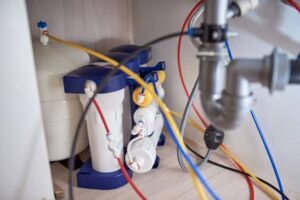
9 Powerful Benefits of an Under Sink Reverse Osmosis System
1. Delivers Cleaner-Tasting Drinking Water
One major advantage of an Under Sink Reverse Osmosis System is improved drinking-water taste. The filtration process can reduce substances associated with unpleasant taste, odour, and mineral-heavy water. This can make ordinary kitchen water taste fresher and more appealing. Cold water from the dedicated faucet can provide a crisp sensory experience for drinking and cooking.
2. Reduces Many Dissolved Contaminants
Reverse osmosis filtration works differently from ordinary sediment filtration. Its membrane provides a fine barrier that can reduce many dissolved solids and selected contaminants. The actual performance depends on feed-water quality, membrane specification, pressure, and system design. This makes laboratory testing and professional assessment important when water contamination is suspected.
3. Saves Valuable Kitchen Counter Space
A conventional countertop reverse osmosis unit occupies visible workspace around the sink. An under sink reverse osmosis filter keeps the main equipment concealed inside the cabinet. This creates a cleaner, more modern kitchen appearance. It also leaves more room for appliances, food preparation, and everyday kitchen activities.
4. Provides Dedicated Drinking Water
A properly installed reverse osmosis drinking system separates treated drinking water from ordinary household water. This is particularly useful when the entire property does not require advanced purification. The system can supply water for drinking, cooking, beverages, and other food-related activities. It can also serve households that want an additional purification layer beyond their existing water filtration tank.
5. Offers Multiple Filtration Configurations
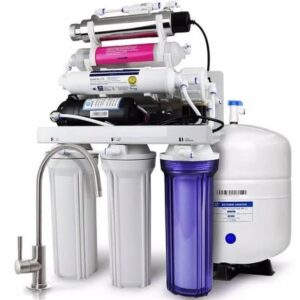
Different water conditions require different treatment approaches. A 5 stage reverse osmosis system may combine sediment, carbon, membrane, and polishing stages. A 6 stage reverse osmosis system can add remineralization or another treatment stage. More advanced systems may combine ro with UV water purifier technology for applications requiring additional microbial protection.
6. Works With Different Water Sources
An Under Sink Reverse Osmosis System can be designed for suitable treated municipal supplies, boreholes, or wells. However, heavily contaminated water may require pre-treatment before entering the membrane. Iron, excessive sediment, hardness, and other conditions can shorten membrane life. A professional installation guide should therefore begin with water testing rather than simply selecting equipment by price.
7. Supports Modern Tankless Designs
A tankless reverse osmosis system eliminates the traditional storage tank in many installations. This can provide a compact configuration with modern monitoring and high-efficiency components. Some systems use digital displays that show TDS, filter status, or system performance. Tankless designs can be especially attractive for contemporary kitchens with limited cabinet space.
8. Can Include Remineralization and Advanced Features
Pure membrane filtration is not always the final treatment stage. A ro system with remineralization can add selected minerals after membrane filtration. Some systems also include a remineralizing water filter, UV treatment, leak detection, automatic shut-off, or electronic monitoring. The right combination depends on the incoming water and the user’s desired treatment outcome.
9. Offers Long-Term Kitchen Water Value
An Under Sink Reverse Osmosis System can become a valuable part of a home’s water-treatment infrastructure. Its value depends on installation quality, replacement schedules, water conditions, and daily consumption. Proper maintenance can protect the reverse osmosis membrane and other filters from premature failure. Although the initial reverse osmosis system cost may exceed basic filtration, the long-term convenience can justify the investment.
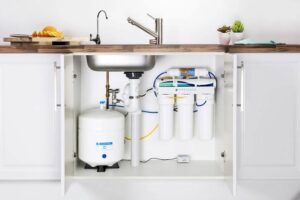
How an Under Sink Reverse Osmosis System Works
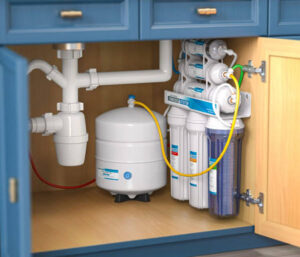
The process usually begins with pre-filtration. Water passes through a water filter sediment stage that captures larger particles such as sand, rust, and suspended matter. A carbon filter can then reduce chlorine and substances affecting taste and odour. These stages protect the membrane from unnecessary stress.
The water then reaches the ro membrane under pressure. This is the central stage of reverse osmosis water purification, where water passes through a semi-permeable membrane. The purified stream continues toward the storage or delivery stage, while concentrated wastewater leaves through the drain. A final polishing or remineralization filter may improve taste before drinking.
Key Features and Specifications to Check
When comparing an Under Sink Reverse Osmosis System, consider the membrane capacity, filtration stages, pressure requirements, storage arrangement, and replacement intervals. Systems may be described by production capacity such as 50, 75, 100, 400 GPD, or higher. A 400 GPD RO system is usually more relevant to demanding applications than ordinary household drinking-water needs.
Also examine membrane quality, pump performance, ro pressure tank, filter availability, faucet design, and automatic shut-off. Check whether replacement parts are readily available from the supplier or installer. Professional installation is particularly important when water pressure, drainage, electrical components, or pre-treatment equipment are involved.
Reverse Osmosis vs Other Water Purification Options
Traditional filters mainly target specific particles, chlorine, odours, or other selected contaminants. Reverse osmosis water filtration provides a different treatment mechanism focused strongly on dissolved substances. UV systems use ultraviolet energy for microbial control but do not remove dissolved minerals. Water softeners primarily address hardness rather than providing complete drinking-water purification.
Therefore, the best reverse osmosis system is not necessarily the most expensive system. The appropriate solution depends on water analysis, household consumption, pressure, available space, and treatment objectives. Some homes may need water softener and reverse osmosis system technology because hardness can affect membrane performance. Others may only require a simpler ro water filter system.
Cost, Maintenance, and Common Problems
The ro water purifier price varies according to capacity, membrane quality, filtration stages, pump technology, brand, and installation requirements. The cost of reverse osmosis system ownership also includes filter replacement, membrane replacement, servicing, electricity, and wastewater management. Cheap equipment can become expensive when replacement parts are difficult to obtain.
Common problems include slow production, low pressure, unpleasant taste, leaks, unusual noise, high wastewater generation, and declining filtration performance. These issues can indicate blocked filters, incorrect pressure, damaged components, exhausted membranes, or installation problems. Regular changing reverse osmosis filters and timely replacing reverse osmosis filters can prevent many avoidable failures.
Where Can These Systems Be Used?
In Nigeria, household and commercial water conditions vary significantly between Lagos, Abuja, Port Harcourt, Kaduna, Uyo, Asaba, Warri, Ibadan, Benin, and Bonny Island. Similar needs occur in Enugu, Kano, Jos, Sokoto, Minna, Zaria, Katsina, Dutse, Maiduguri, Gombe, Bauchi, Yola, and Jalingo. Water-treatment requirements can also differ across Makurdi, Abakaliki, Awka, Onitsha, Owerri, and Umuahia.
Demand extends through Rivers State, Akwa Ibom State, Delta State, Edo State, Ogun State, Ilorin, Lokoja, Akure, Oshogbo, Ekiti, and Ile-Ife. Locations around Suleja, Karu, Mararaba, Keffi, and Gurara may require different configurations based on source-water characteristics. Abuja-area installations can also serve Zuba, Gwagwalada, Kuje, Bwari, and Abaji.
Across West Africa, similar water-quality requirements exist in Accra, Kumasi, Cotonou, Lomé, Abidjan, Monrovia, Freetown, Banjul, Cape Verde, and Dakar. The correct system should always reflect the local water source and intended application. This approach is more reliable than choosing equipment based solely on online reviews or advertised specifications.
Vistacraft Builders provides professional water-treatment solutions designed around practical water-quality requirements. Its approach can support residential kitchens, offices, hospitality facilities, schools, estates, and selected commercial applications. Professional assessment helps customers choose between under-counter, countertop, tankless, commercial, and larger-scale systems.
Frequently Asked Questions
Is an Under Sink Reverse Osmosis System worth it?
Yes, it can be worthwhile when drinking-water quality is a priority. Its value depends on incoming water quality, consumption, installation quality, and maintenance requirements.
What is the difference between RO and a normal water filter?
A conventional filter may target sediment, chlorine, or taste-related impurities. RO uses a membrane-based process designed to reduce many dissolved substances.
Does RO remove minerals?
RO can reduce many dissolved minerals and salts. A reverse osmosis with remineralization configuration can restore selected minerals after membrane filtration.
How often should RO filters be changed?
Replacement intervals vary according to water quality, consumption, filter type, and manufacturer specifications. Heavy sediment or contamination can shorten filter life.
Is RO suitable for borehole water?
It can be suitable, but borehole water should be tested first. Excessive iron, hardness, sediment, or other contaminants may require pre-treatment.
What affects the price of an RO system?
Major factors include capacity, membrane quality, filtration stages, pumps, tanks, faucets, installation, pre-treatment, replacement parts, and maintenance requirements.Conclusion
An Under Sink Reverse Osmosis System provides a smart and convenient approach to improving drinking and cooking water at the kitchen point of use. Its compact design, multi-stage filtration, and advanced membrane technology make it an attractive modern option. The best results come from matching system specifications with actual water conditions and household demand. Professional installation and regular maintenance can also protect performance and extend equipment life.
For households seeking cleaner water without sacrificing kitchen space, the technology offers a powerful upgrade. For businesses, offices, hotels, restaurants, and institutions, larger reverse osmosis water treatment systems may provide greater capacity. The critical step is choosing a reliable system based on water testing, specifications, lifecycle cost, and professional support.
Get Your Water Treatment Solution!
🌐 Visit: www.vistacraftbuilders.com.ng 📧 Email: info@vistacraftbuilders.com.ng 📞 Call/WhatsApp: +234 911 416 6874
Vistacraft Builders — Building Quality. Creating Lasting Value. At Vistacraft Builders, we provide – Portable Toilets in Nigeria, Portable Toilets Price in Nigeria, Mobile Toilet for Hire, Building Site Toilet Hire, Portable Toilets for Elderly Users, Medical Portable Toilets, Portable Toilets for RVs, FRP Portable Toilet, Readymade Toilet and Bathroom, Emergency Portable Toilet Rental, Portable Toilet Business in Nigeria, Portable Toilet Rental Cost, Portable Chemical Toilet vs Flush Toilet, Camco Portable Toilet, Portable Sink and Toilet, Portable Toilet Price in Nigeria, Portable Toilets for Sale in Nigeria, Portable Toilet Suppliers in Nigeria, Water Filter and Purifier for Tank, Water Purifier in Nigeria, Reverse Osmosis Explained, RO Water Purifier, Reverse Osmosis Machine, RO Technology in Water, Reverse Osmosis Water Treatment, Under Sink Reverse Osmosis System,