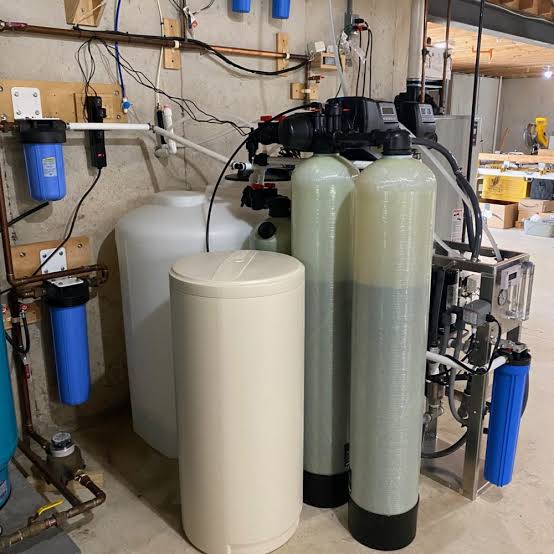
Whole Home Reverse Osmosis is a centralized water-treatment approach that uses reverse osmosis to purify water before distribution throughout a property. Unlike an under sink reverse osmosis system, it treats water at the main entry point. This allows treated water to reach showers, kitchen taps, bathrooms, appliances, and other household outlets. It can be especially valuable where poor water quality, high TDS, hardness, unpleasant smell, or contamination affects the entire property.
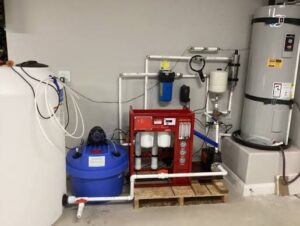
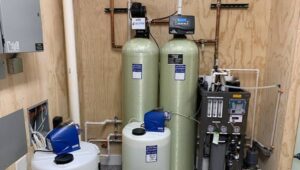
A typical whole house reverse osmosis system combines pre-filtration, pumps, membrane technology, storage, and post-treatment. Depending on water conditions, the setup may include a sediment filter, carbon filter, iron removal, softening, UV, and remineralization filter. The precise configuration depends on laboratory water testing and the intended flow rate. This makes professional assessment essential before purchasing a whole home reverse osmosis system.
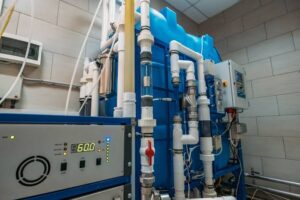
8 Incredible Benefits of Whole Home Reverse Osmosis
1. Treats Water Throughout the Property
The biggest advantage of Whole Home Reverse Osmosis is comprehensive water treatment. Instead of purifying water only at one kitchen faucet, the system can supply treated water throughout the building. This creates a consistent water-quality strategy for the kitchen, bathroom, laundry, and other outlets. It can benefit large families, estates, apartments, hotels, and selected commercial properties.
This approach can be particularly useful where borehole water, well water, or other private sources contain unwanted dissolved substances. A properly designed reverse osmosis water filtration system can become part of a broader household treatment train. Pre-treatment remains important when the source contains excessive sediment, iron, hardness, or other membrane-damaging conditions. The result is a more complete and carefully engineered water-treatment solution.
2. Reduces Dissolved Impurities
Reverse osmosis filtration uses pressure to move water through a semi-permeable ro membrane. The membrane can reduce many dissolved solids and selected contaminants, depending on its specifications. This makes reverse osmosis water treatment fundamentally different from basic sediment filtration. It is one reason RO remains an important technology for demanding water-purification applications.
A reverse osmosis membrane filter requires suitable operating pressure and effective pre-treatment. The system may also require a pump, membrane housing, storage tank, and monitoring equipment. Water testing helps determine whether additional treatment is necessary. This prevents the common mistake of installing an expensive RO unit without addressing the source-water problem.
3. Improves Water Taste and Appearance
Water with excessive minerals, sediment, or certain dissolved substances can taste unpleasant or appear cloudy. Properly designed reverse osmosis water purification can improve clarity and reduce substances associated with undesirable taste. The experience can be noticeable when drinking cold water or preparing tea, coffee, and meals. Cleaner-tasting water can make everyday hydration more convenient and refreshing.
A post-treatment remineralizing water filter can be added when appropriate. Some configurations combine reverse osmosis with remineralization to improve the final water profile. Others may include reverse osmosis with UV light where additional microbial treatment is required. The correct choice depends on water analysis rather than marketing labels.
4. Protects Appliances and Plumbing
Hard water can contribute to scaling inside pipes, heaters, fixtures, and appliances. Mineral-heavy water may create deposits that affect performance over time. A suitable water softener and reverse osmosis system can address different aspects of water quality. However, softening and RO perform different functions and should not be treated as interchangeable technologies.
For challenging sources, pre-treatment can include a water softener, iron filtration, sediment filtration, or activated carbon. A sand filter for home water tank may also be appropriate for certain particulate loads. These measures can help protect the main membrane and downstream equipment. The objective is efficient treatment rather than simply adding more filtration stages.
5. Provides a Centralized Treatment Strategy
A centralized whole house RO system can simplify water-treatment management for larger properties. Instead of maintaining several independent point-of-use units, one engineered system can serve multiple outlets. This can be attractive for homes with large families, estates, hospitality facilities, schools, and offices. It can also support a more organized maintenance schedule.
However, centralized RO requires appropriate hydraulic design. Flow demand, storage volume, pressure, wastewater handling, and filtration capacity must all be considered. A high-flow or large-scale installation may require substantially different equipment from a domestic RO system. This is why professional design is more important than simply searching for the best whole house reverse osmosis system.
6. Offers Flexible System Configurations
Modern RO technology comes in many configurations. Residential options include 4 stage reverse osmosis system, 5 stage reverse osmosis system, 6 stage reverse osmosis system, and 7 stage reverse osmosis system designs. Commercial installations can use higher-capacity systems, while industrial applications may require an industrial reverse osmosis system. Some applications may use a 400 GPD RO system, while larger facilities need significantly greater capacity.
Tankless technology is another option for suitable point-of-use applications. A tankless reverse osmosis system can reduce equipment footprint and provide modern monitoring features. Whole-property installations often require storage because household demand can exceed instantaneous membrane production. Therefore, capacity should be matched to actual consumption and peak demand.
7. Supports Different Water Sources
Water-treatment requirements can differ dramatically between cities and properties. In Nigeria, households in Lagos, Abuja, Port Harcourt, Kaduna, Uyo, Asaba, Warri, and Ibadan may face different source-water conditions. Similar considerations apply in Benin, Enugu, Kano, Jos, Sokoto, Minna, Zaria, Katsina, Dutse, Maiduguri, Gombe, and Bauchi. Water analysis remains the foundation for selecting the right treatment train.
The same principle applies across Yola, Jalingo, Makurdi, Abakaliki, Awka, Onitsha, Owerri, Umuahia, and Rivers State. Properties in Akwa Ibom State, Delta State, Edo State, Abeokuta, Ogun State, Ilorin, Lokoja, Akure, Oshogbo, Ekiti, and Ile-Ife can also require customized solutions. Areas around Suleja, Karu, Mararaba, Keffi, and Gurara may similarly benefit from source-specific treatment.
8. Creates a Powerful Long-Term Water Strategy
A well-designed whole home reverse osmosis water system can provide a comprehensive framework for managing household water quality. It may combine pre-filtration, RO, storage, pressure management, and post-treatment. This makes it more sophisticated than simply buying a ro water purifier or countertop filter. The system can also be expanded where future household demand increases.
Across West Africa, similar requirements occur in Accra, Kumasi, Cotonou, Lomé, Abidjan, Monrovia, Freetown, Banjul, Cape Verde, and Dakar. Demand also exists in Sekondi-Takoradi, Tamale, Sunyani, Tema, Cape Coast, Elmina, Winneba, Keta, Ada Foah, and Ho. Local water conditions should determine the membrane, pump, storage, pre-treatment, and filtration capacity. That approach produces a more reliable and cost-effective installation.
Whole Home Reverse Osmosis Buying Guide
Before choosing a system, consider five critical factors: water quality, daily consumption, peak flow, available installation space, and maintenance requirements. Test for TDS, hardness, iron, sediment, microbial contamination, and other relevant parameters. Then determine whether you need a domestic, commercial, or industrial configuration. This process provides a stronger basis for comparing reverse osmosis system price and installation cost.
Also consider membrane life, replacement cost, filter availability, pump specifications, tank capacity, and wastewater management. Ask the supplier about maintenance cost, running cost, replacement parts, servicing, and professional installation. Avoid selecting equipment simply because it is advertised as the best reverse osmosis system. The best solution is the one correctly matched to your water and usage requirements.
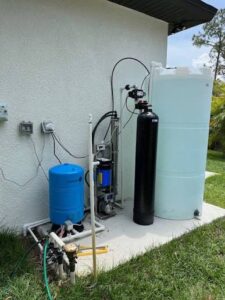
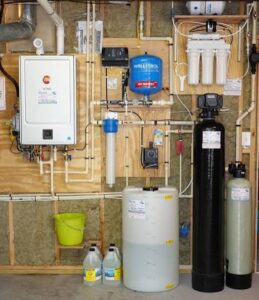
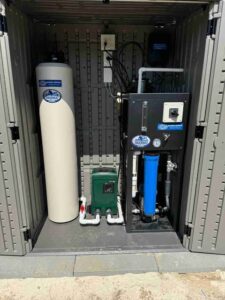
Whole Home Reverse Osmosis vs Under-Sink and Countertop Systems
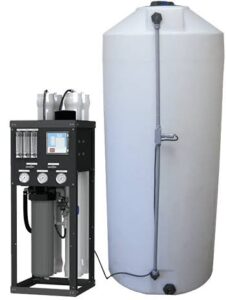
An under sink reverse osmosis system primarily treats water at one point of use. A countertop reverse osmosis system offers portability and simple installation for selected applications. A whole house reverse osmosis water filtration system is designed for much broader distribution. Each option has advantages and disadvantages based on the property’s size and water-treatment objectives.
For a small household needing drinking water only, point-of-use RO may be more practical. For a large property requiring comprehensive treatment, centralized RO can offer a stronger solution. Commercial properties may require a commercial reverse osmosis system instead. Industrial facilities need more advanced engineering, monitoring, and capacity planning.
Common Problems and Maintenance
Common RO problems include declining flow, low pressure, leaks, unpleasant taste, exhausted filters, scaling, and premature membrane failure. These issues can result from poor pre-treatment, incorrect pressure, neglected maintenance, or unsuitable system sizing. Regular servicing helps identify warning signs before they become costly failures. Filter replacement should follow water conditions and manufacturer recommendations.
Maintenance can include changing reverse osmosis filters, inspecting pumps, checking pressure, sanitizing storage tanks, and monitoring TDS. The reverse osmosis tank pressure should also remain within the manufacturer’s specified range. Membrane replacement depends on feed-water quality, operating conditions, and maintenance practices. Proper servicing helps protect the system’s performance and total cost of ownership.
Why Choose VistaGreen?
VistaGreen approaches water treatment as an engineered process rather than a one-size-fits-all product sale. Its solutions can be tailored for residential properties, offices, hospitality facilities, institutions, estates, and commercial applications. Water assessment helps determine whether a whole house RO, softener, carbon filter, UV stage, or additional pre-treatment is appropriate. This professional approach supports reliable system selection and installation.
The company serves water-treatment requirements across Nigeria and other African markets. Its expertise can support projects ranging from residential ro water systems to larger commercial RO systems and industrial applications. Customers can request professional assessment, quotations, custom solutions, installation, maintenance, and replacement parts. This helps make advanced water treatment more practical and sustainable.
Frequently Asked Questions
Is Whole Home Reverse Osmosis worth the investment?
It can be worthwhile when the entire property has significant water-quality concerns. The decision should consider water testing, household consumption, system cost, maintenance, and treatment objectives.
Does whole-house RO remove everything from water?
No treatment system removes every possible contaminant under every condition. RO can reduce many dissolved substances, but performance depends on membrane specifications and source-water conditions.
Can RO treat borehole water?
Yes, but borehole water should be tested first. Sediment, iron, hardness, and other conditions may require pre-treatment before the RO membrane.
Is whole-house RO better than an under-sink system?
Neither is universally better. Whole-house RO treats broader distribution, while under-sink RO is generally more focused on drinking and cooking water.
How much does a whole-house RO system cost?
The cost depends on capacity, water quality, membrane technology, pumps, storage, pre-treatment, installation, and maintenance requirements. A professional quotation provides a more accurate cost breakdown.
Does whole-house RO require maintenance?
Yes. Filters, membranes, pumps, tanks, and other components require periodic inspection and servicing. Proper maintenance helps preserve filtration performance and system life.Conclusion
Whole Home Reverse Osmosis offers a powerful approach to comprehensive household water treatment. It can provide centralized purification where water-quality concerns extend beyond a single drinking-water faucet. Its effectiveness depends on correct water testing, system design, installation, maintenance, and capacity selection. Families should therefore prioritize engineering quality rather than simply choosing the cheapest equipment.
The right solution can combine RO membranes with sediment filtration, carbon treatment, softening, UV, storage, and remineralization when required. Whether the property is a family home, apartment, estate, hotel, school, office, or commercial facility, proper assessment remains essential. With professional planning, full-house filtration can become a convenient, reliable, and valuable part of modern water management.
Get Your Water Treatment Solution!
🌐 Visit: www.vistacraftbuilders.com.ng 📧 Email: info@vistacraftbuilders.com.ng 📞 Call/WhatsApp: +234 911 416 6874
Vistacraft Builders — Building Quality. Creating Lasting Value. At Vistacraft Builders, we provide – Portable Toilets in Nigeria, Portable Toilets Price in Nigeria, Mobile Toilet for Hire, Building Site Toilet Hire, Portable Toilets for Elderly Users, Medical Portable Toilets, Portable Toilets for RVs, FRP Portable Toilet, Readymade Toilet and Bathroom, Emergency Portable Toilet Rental, Portable Toilet Business in Nigeria, Portable Toilet Rental Cost, Portable Chemical Toilet vs Flush Toilet, Camco Portable Toilet, Portable Sink and Toilet, Portable Toilet Price in Nigeria, Portable Toilets for Sale in Nigeria, Portable Toilet Suppliers in Nigeria, Water Filter and Purifier for Tank, Water Purifier in Nigeria, Reverse Osmosis Explained, RO Water Purifier, Reverse Osmosis Machine, RO Technology in Water, Reverse Osmosis Water Treatment, Under Sink Reverse Osmosis System, Whole Home Reverse Osmosis,