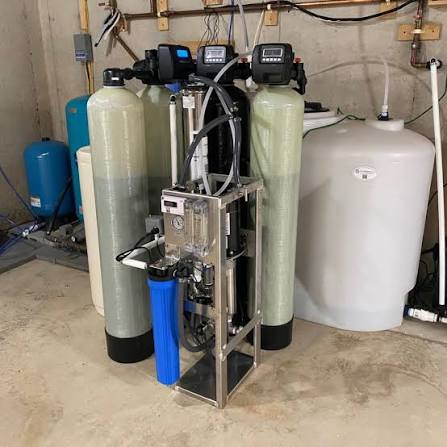
Residential Reverse Osmosis System technology provides advanced household water purification by forcing water through a semi-permeable membrane under pressure. It helps reduce many dissolved substances, salts, unpleasant tastes, and other unwanted contaminants. This makes it valuable for homes dealing with borehole water, well water, high TDS, hard water, or poor water quality. The result is cleaner, fresher-tasting water for drinking, cooking, and everyday household needs.
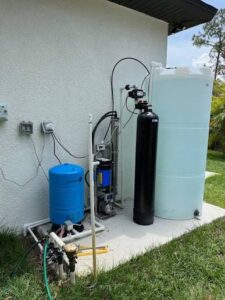

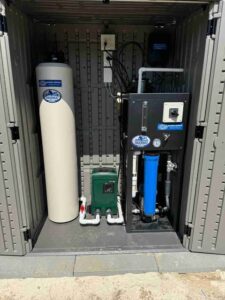
What Is a Residential Reverse Osmosis System?
A Residential Reverse Osmosis System is a domestic water-treatment solution designed to improve drinking-water quality through multiple filtration stages. Most systems combine sediment filtration, carbon filtration, an RO membrane, and optional post-treatment technologies. The central reverse osmosis membrane provides an extremely fine filtration barrier for reducing many dissolved contaminants. Depending on the configuration, systems can include remineralization, UV treatment, pressure pumps, and dedicated storage.
The process begins when incoming water passes through a sediment filter. This stage helps capture particles such as sand, rust, dirt, and suspended sediment. Carbon filtration can then reduce chlorine, odors, and selected organic compounds before water reaches the RO membrane. Pressure pushes water through the membrane while concentrated contaminants are separated from the purified water stream.
9 Powerful Benefits of a Residential Reverse Osmosis System
1. Produces Cleaner-Tasting Drinking Water
A Residential Reverse Osmosis System can improve the taste and sensory quality of household drinking water. Unpleasant flavours can result from dissolved minerals, chlorine, salts, and other substances. RO filtration reduces many of these contributors before treated water reaches the drinking tap. This can create a noticeably cleaner, smoother, and more refreshing drinking experience.
For families, better-tasting water can encourage more consistent water consumption throughout the day. It can also improve the taste of tea, coffee, soups, and meals prepared with treated water. This makes RO particularly attractive for kitchens where water quality affects daily routines. However, the final result depends on incoming water quality and system design.
2. Helps Reduce Dissolved Contaminants
The major advantage of reverse osmosis water treatment is its ability to reduce many dissolved substances. Conventional sediment filters mainly target particles rather than dissolved solids. An RO membrane provides a more advanced barrier for substances that ordinary filtration may not adequately address. This makes RO useful when water testing identifies elevated TDS or specific dissolved contaminants.
A quality reverse osmosis water purifier normally combines the membrane with appropriate pre-filtration. This protects the membrane while improving overall treatment performance. The system should therefore be selected according to actual water conditions. Water testing remains an essential step before installation.
3. Provides a Solution for Borehole and Well Water
Borehole and well supplies can contain sediment, iron, hardness, unpleasant smells, or elevated mineral concentrations. A properly designed reverse osmosis system for well water can help address dissolved-quality problems after suitable pretreatment. Heavy sediment or iron may require additional filtration before the RO stage. This protects the membrane and can extend its useful operating life.
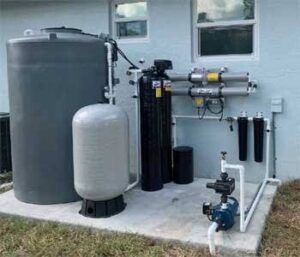
A complete treatment train may therefore include a sand filter, iron-removal filter, carbon filter, water softener, and RO system. The exact combination depends on laboratory results and the intended application. This approach is more reliable than purchasing a generic purifier without testing the source. It also helps avoid costly mistakes caused by unsuitable equipment.
4. Creates Convenient Drinking-Water Access
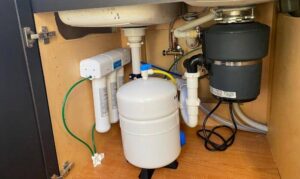
An under sink reverse osmosis system provides purified water directly from a dedicated kitchen faucet. The equipment remains beneath the counter, preserving valuable kitchen workspace. A countertop configuration can provide another option where permanent installation is unsuitable. Tankless designs can further reduce equipment footprint.
A modern kitchen reverse osmosis system can therefore fit different household layouts. Systems may include a storage tank, pressure tank, automatic shutoff, dedicated faucet, and post-filter. The right configuration depends on available space and daily water demand. Convenience is one reason domestic RO continues to attract homeowners seeking advanced filtration.
5. Supports Different Filtration Configurations
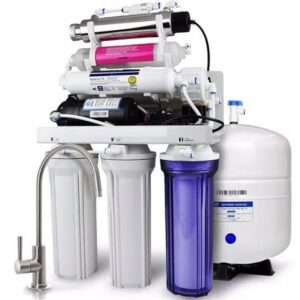
Residential RO systems are available in different stage configurations. Common options include a 4 stage reverse osmosis system, 5 stage reverse osmosis system, 6 stage reverse osmosis system, and 7 stage reverse osmosis system. Additional stages may include remineralization, UV treatment, or specialized filtration. More stages do not automatically mean better performance.
A 5 stage RO system may combine sediment, carbon, membrane, and post-filtration stages. A reverse osmosis with remineralization system can add selected minerals after membrane filtration. Systems with UV can provide an additional disinfection barrier. The best configuration should match the water source rather than simply the number of stages.
6. Improves Water Quality Management
A Residential Reverse Osmosis System can become part of a broader household water-management strategy. Homes may first use a water tank filter to reduce incoming sediment and particles. RO can then provide additional treatment for drinking and cooking water. This layered approach can be useful where water quality changes seasonally.
A Water Filter and Purifier for tank may address different needs from an RO unit. Tank filtration focuses on protecting stored household water, while RO commonly targets drinking-water quality. Combining appropriate technologies can create a more complete treatment strategy. The key is choosing each component for its specific purpose.
7. Offers Long-Term Value When Properly Maintained
The value of RO should not be judged by purchase price alone. Buyers should consider the cost of reverse osmosis system, installation cost, replacement filters, membrane replacement, maintenance, water consumption, and running costs. These factors determine the system’s total cost over time. A cheaper unit can become expensive if replacement parts are unavailable or maintenance is difficult.
Regular servicing also protects performance. Changing reverse osmosis filters according to manufacturer recommendations helps maintain filtration quality. Membrane life depends on feed-water quality, pressure, usage, and pretreatment. A reliable maintenance plan can therefore prevent avoidable and costly failures.
8. Can Be Designed for Different Household Needs
A small apartment may require a small reverse osmosis system with modest production capacity. A large family may need higher storage capacity and faster production. Larger properties may consider a whole house reverse osmosis system, although this requires careful hydraulic and pretreatment design. Commercial applications require even greater capacity and different specifications.
For example, a 400 GPD RO system may suit certain higher-demand applications. Hotels, hospitals, schools, restaurants, estates, and production facilities may require commercial or industrial systems instead. Choosing equipment according to GPD, pressure, membrane capacity, and water demand improves efficiency. Professional assessment is therefore essential for high-capacity installations.
9. Supports Cleaner, Safer Household Water
The ultimate goal of residential water treatment is dependable access to better-quality water. RO can help reduce many dissolved contaminants while complementary filtration addresses sediment, chlorine, taste, or microbial concerns. A ro uv water purifier can combine membrane filtration with UV treatment. A ro system with remineralization can provide another post-treatment option.
These technologies can create a powerful household treatment solution when correctly specified. However, RO does not remove every possible contaminant, and no single system suits every water source. Testing and professional system design remain critical. This helps households avoid unrealistic expectations and select treatment based on measurable water-quality needs.
How Does a Residential Reverse Osmosis System Work?
The typical RO process follows several stages. First, sediment filtration captures larger particles from incoming water. Carbon filtration then protects the membrane and improves taste and odour characteristics. The pressurized water enters the RO membrane, where dissolved substances are separated from the treated stream.
The purified water may flow into an RO pressure tank or directly through a tankless system. A post-filter can provide final polishing before water reaches the dedicated faucet. Some systems add UV, remineralization, or other specialized treatment stages. This step-by-step process explains why RO provides more advanced treatment than basic particle filtration.
Residential Reverse Osmosis System Buying Guide
Before choosing a Residential Reverse Osmosis System, test the incoming water. Check relevant parameters such as TDS, hardness, iron, sediment, pH, and microbiological quality. Then compare membrane capacity, GPD rating, pressure requirements, tank size, filtration stages, replacement parts, warranty, and installation requirements. These specifications provide a better basis for selecting reliable equipment.
Buyers should also compare the RO system price with long-term operating costs. Ask about membrane replacement, filter replacement, servicing, installation, and spare-part availability. Avoid choosing equipment solely because it has the cheapest price or the largest number of stages. A properly designed system is usually more valuable than an unnecessarily complicated one.
RO vs Traditional Water Filtration
Traditional filtration remains useful for many applications. Sediment filters can remove particles, while carbon filters can improve taste and reduce chlorine. RO provides a different treatment function because its membrane can reduce many dissolved substances. Therefore, reverse osmosis and water purification should be viewed as part of a broader water-treatment spectrum.
For example, a household may use a water filter for water tank before sending water to a kitchen RO system. Another property may need iron removal or softening before RO. The correct solution depends on the source and intended use. Professional assessment helps determine which combination provides the appropriate treatment.
Installation and Maintenance Guide
Professional installation helps ensure correct plumbing, drainage, pressure, electrical connections, and sanitation. The installer should also inspect the water source and existing storage arrangements. Systems connected to boreholes may need pretreatment before the RO membrane. Incorrect installation can cause leaks, poor production, premature membrane failure, or inconsistent performance.
Maintenance should include scheduled filter replacement and membrane inspection. Users should watch for reduced flow, unusual taste, leaks, excessive noise, or changes in water quality. These are potential warning signs that servicing may be required. Keeping replacement parts available also reduces unnecessary downtime.
Residential RO Applications Across Nigeria and West Africa
Demand for household water treatment extends across major Nigerian locations, including Lagos, Abuja, Port Harcourt, Kaduna, Uyo, Asaba, Warri, Ibadan, Benin, Bonny Island, Enugu, Kano, and Jos. Residential applications also extend to Suleja, Karu, Mararaba, Keffi, Gurara, Zuba, Gwagwalada, Kuje, Bwari, and Abaji. Other markets include Sokoto, Minna, Zaria, Katsina, Dutse, Maiduguri, Gombe, Bauchi, Yola, and Jalingo.
Further demand exists across Makurdi, Abakaliki, Awka, Onitsha, Owerri, Umuahia, Rivers State, Akwa Ibom State, Delta State, and Edo State. Southern and southwestern markets include Abeokuta, Ogun State, Ilorin, Lokoja, Akure, Oshogbo, Ekiti, and Ile-Ife. Across West Africa, household water-treatment opportunities include Accra, Kumasi, Cotonou, Lomé, Abidjan, Monrovia, Freetown, Banjul, Cape Verde, and Dakar. Local water conditions vary considerably, so treatment specifications should always reflect the actual source.
Why Choose Vistacraft Builders?
Vistacraft Builders provides professionally designed water-treatment solutions for residential and broader applications. Its approach focuses on matching equipment specifications with water quality, household demand, installation conditions, and maintenance requirements. This includes solutions involving RO filtration, water tanks, pumps, membranes, pretreatment, and complementary purification technologies. The objective is practical, reliable water treatment rather than unnecessary equipment complexity.
For households, estates, offices, hotels, schools, hospitals, and other facilities, system selection should begin with the water problem. From a compact under-sink installation to a high-capacity treatment plant, the design should reflect measurable requirements. Professional quotation and installation can then establish the correct equipment configuration. This approach supports better performance and more predictable ownership costs.
Frequently Asked Questions
What is a Residential Reverse Osmosis System?
A Residential Reverse Osmosis System is a household purification system that uses pressure and a semi-permeable membrane to reduce many dissolved substances from water.
Is RO suitable for borehole water?
Yes, but borehole water should be tested first. Sediment, iron, hardness, and other conditions may require pretreatment before the RO stage.
What is the difference between RO and a normal water filter?
Basic filters commonly target particles, chlorine, taste, or odour. RO uses a membrane capable of reducing many dissolved substances.
How often should RO filters be changed?
Replacement frequency depends on water quality, usage, filter type, and manufacturer specifications. Poor feed-water quality can shorten filter life.
Is a tankless RO system better?
Tankless systems can save space and provide on-demand production. Traditional tank systems can provide treated-water storage. The appropriate choice depends on household demand and installation conditions.
Is a Residential Reverse Osmosis System worth the investment?
It can be worthwhile where water testing identifies dissolved contaminants or persistent quality problems. Buyers should evaluate installation, maintenance, replacement, and running costs before deciding.Conclusion
A Residential Reverse Osmosis System can provide a powerful approach to improving household drinking-water quality. Its benefits include dissolved-contaminant reduction, better taste, flexible installation, and compatibility with complementary treatment technologies. The most important step is matching the system to the actual water source and household requirements. With proper testing, installation, and maintenance, RO can become a valuable part of a cleaner and safer household water strategy.
Get Your Water Treatment Solution!
🌐 Visit: www.vistacraftbuilders.com.ng 📧 Email: info@vistacraftbuilders.com.ng 📞 Call/WhatsApp: +234 911 416 6874
Vistacraft Builders — Building Quality. Creating Lasting Value. At Vistacraft Builders, we provide – Portable Toilets in Nigeria, Portable Toilets Price in Nigeria, Mobile Toilet for Hire, Building Site Toilet Hire, Portable Toilets for Elderly Users, Medical Portable Toilets, Portable Toilets for RVs, FRP Portable Toilet, Readymade Toilet and Bathroom, Emergency Portable Toilet Rental, Portable Toilet Business in Nigeria, Portable Toilet Rental Cost, Portable Chemical Toilet vs Flush Toilet, Camco Portable Toilet, Portable Sink and Toilet, Portable Toilet Price in Nigeria, Portable Toilets for Sale in Nigeria, Portable Toilet Suppliers in Nigeria, Water Filter and Purifier for Tank, Water Purifier in Nigeria, Reverse Osmosis Explained, RO Water Purifier, Reverse Osmosis Machine, RO Technology in Water, Reverse Osmosis Water Treatment, Under Sink Reverse Osmosis System, Whole Home Reverse Osmosis, Residential Reverse Osmosis System,