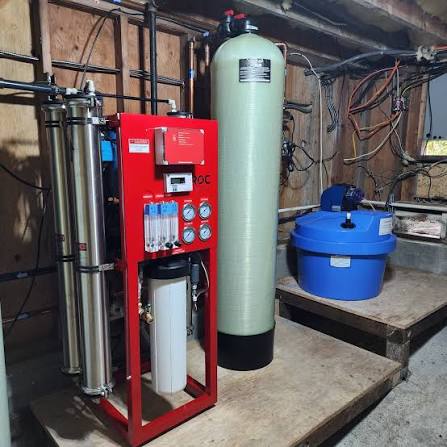
Water Softener technology reduces hardness-causing minerals, especially calcium and magnesium, helping prevent scaling and improve water quality. It matters because hard water can leave deposits on plumbing, heaters, appliances, and treatment equipment. When combined with reverse osmosis, softening can provide valuable pretreatment before deeper membrane purification. This smart combination can create cleaner, more manageable water for homes, offices, hotels, hospitals, schools, businesses, and industrial facilities.
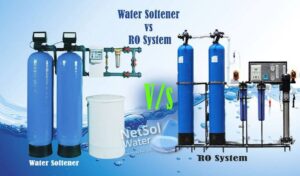
What Is a Water Softener?
A Water Softener is a water-treatment device designed primarily to reduce hardness caused by dissolved calcium and magnesium. Most conventional softeners use ion-exchange resin, which exchanges hardness ions for sodium or another suitable ion. The process can reduce hard water, scaling, and mineral deposits throughout a treated water supply. However, a softener is not the same as a reverse osmosis system, because each technology addresses different water-quality concerns.
A reverse osmosis water filter uses pressure to push water through a semi-permeable ro membrane. This membrane can reduce many dissolved salts and other substances, making RO useful for drinking-water purification and specialized production. Softening can therefore protect RO equipment when hardness creates a scaling risk. The result is a more complete treatment strategy rather than relying on one technology for every water problem.
1. Reduces Hard Water and Scaling
The first major benefit of a Water Softener is reducing hardness before it creates persistent deposits. Hard water can leave white scale around taps, shower fittings, heaters, pipes, and water tanks. In commercial facilities, scaling can affect boilers, process equipment, and treatment components. Reducing hardness can therefore support cleaner plumbing and more efficient water-treatment operations.
2. Protects Reverse Osmosis Membranes
Hardness can contribute to mineral scaling on an RO membrane under unsuitable operating conditions. A softener can act as pretreatment before the reverse osmosis filtration system, reducing the hardness burden reaching the membrane. This can make membrane management easier when feed-water analysis confirms significant hardness. However, the exact treatment sequence should always reflect the water chemistry.
3. Supports Better Drinking Water Treatment
A Water Softener does not replace RO when the objective is substantial dissolved-solids reduction. Instead, it can complement a reverse osmosis water purification system designed for drinking water. Additional stages may include a sediment filter, carbon filter, remineralization filter, or UV treatment. The correct combination depends on whether the water comes from a borehole, well, municipal supply, or another source.
4. Helps Protect Household Appliances
Hardness can cause deposits inside water heaters, washing machines, dishwashers, coffee equipment, and other appliances. A whole-property softening system can reduce hardness exposure across the treated water network. Point-of-use RO can then provide separately purified water for drinking and cooking. This traditional-versus-modern combination can be more practical than expecting one filtration device to perform every function.
5. Improves Water Treatment Efficiency
A smart treatment design begins with testing rather than purchasing the largest available system. Water analysis should examine hardness, TDS, iron, sediment, pH, salinity, and microbiological quality where necessary. These results determine whether softening, carbon filtration, iron removal, RO, UV, or other processes are appropriate. This approach can reduce avoidable mistakes and create a more cost-effective treatment system.
6. Supports Different System Types
There are different types of water-treatment configurations for different applications. A household may require a domestic softener and under sink reverse osmosis unit, while a hotel may need high-capacity commercial treatment. A factory or water-production facility could require a commercial reverse osmosis system, pressure pumps, storage tanks, membrane housings, and automated controls. Capacity, flow rate, hardness, TDS, and intended use should determine the specifications.
7. Provides a Strong Solution for Borehole Water
Borehole water can contain hardness, iron, sediment, unpleasant smell, high TDS, or other water-quality concerns. A Water Softener may address hardness, but it will not automatically remove every contaminant. Depending on test results, treatment may also require an iron filter for water tank, sand filtration, carbon filtration, or RO. This makes laboratory analysis an essential part of any professional installation guide.
8. Creates a More Complete Commercial Solution
Commercial facilities have different water requirements from ordinary homes. Hotels, restaurants, hospitals, schools, churches, factories, estates, and pure-water businesses may need different treatment capacities. A commercial RO system can provide purified water for specific processes, while softening can condition larger water volumes. High-flow systems should be engineered around actual consumption rather than marketing specifications alone.
9. Can Reduce Long-Term Maintenance Challenges
A good system is designed not only for installation but also for ongoing maintenance. Filters require replacement, resin may require regeneration, and RO membranes eventually need servicing or replacement. Important considerations include membrane life, replacement cost, maintenance cost, running cost, pressure requirements, and availability of replacement parts. A professional maintenance guide should also address leaks, pressure changes, declining flow, scaling, and changes in water taste.
10. Works Across Residential and Industrial Applications
The right Water Softener can support applications ranging from apartments and large families to industrial plants. Residential users may prefer compact systems, while larger facilities may need heavy-duty equipment with high filtration capacity. Some RO installations use 400 GPD configurations, while industrial systems can operate at substantially higher capacities. The correct choice depends on water demand, source quality, treatment objectives, and available infrastructure.
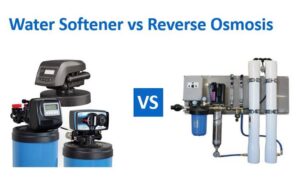
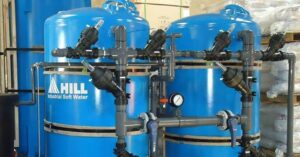
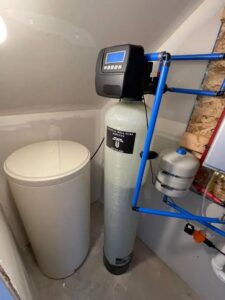
Water Softener and Reverse Osmosis: How They Work Together
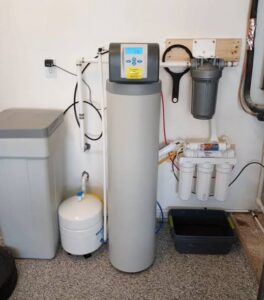
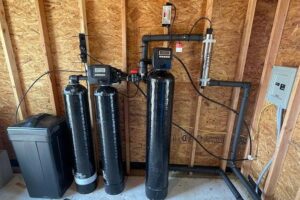
The treatment process can follow a logical step-by-step sequence. Incoming water may first pass through sediment and carbon filtration before entering the softener. Softened water can then enter the reverse osmosis water treatment system, where pressure drives water through the membrane. Depending on the application, treated water may pass through remineralization, UV, storage, or final polishing.
This arrangement is particularly useful where hard water threatens membrane performance. It can also make troubleshooting easier because each treatment stage performs a defined function. For example, sediment filtration handles suspended particles, carbon targets chlorine and certain organic compounds, softening targets hardness, and RO addresses many dissolved substances. Good system design is therefore about matching technologies to specific water-quality problems.
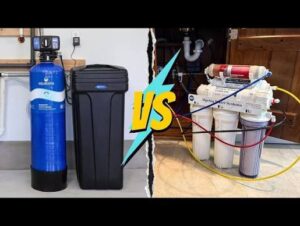
Water Softener vs Reverse Osmosis: What Is the Difference?
A Water Softener primarily targets calcium and magnesium hardness. RO uses membrane separation to reduce many dissolved substances and is commonly used where lower-TDS water is required. Neither technology should automatically be considered a universal replacement for the other. The choice depends on the source water, intended application, treatment capacity, and required water quality.
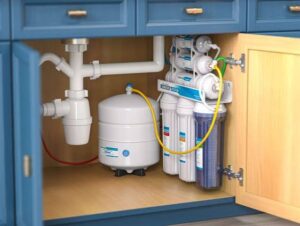
For example, a home may use softening for general household water while using countertop reverse osmosis or an under sink reverse osmosis system for drinking water. A commercial facility may require a larger industrial reverse osmosis system combined with pretreatment. This application-specific approach is more reliable than selecting equipment based solely on price.
Buying Guide: What Should You Check?
Before purchasing, consider these essential factors:
- Water analysis: Check hardness, TDS, iron, sediment, pH, salinity, and microbiological quality.
- Capacity: Match the system to household or commercial demand.
- Pretreatment: Determine whether sediment, carbon, iron removal, or softening is necessary.
- RO specifications: Consider GPD capacity, membrane type, pressure, recovery, and storage.
- Installation: Check available space, drainage, plumbing, electricity, and operating pressure.
- Maintenance: Confirm replacement filters, resin servicing, membrane replacement, and professional support.
- Total cost: Consider equipment price, installation cost, maintenance cost, running cost, and replacement cost.
Searches for Water Softener price, reverse osmosis system price, ro filter price, and ro membrane price can provide starting points. However, an accurate quotation requires system specifications and water-quality information. The cheapest equipment may not provide the lowest total cost over its operating life.
Water Treatment Across Nigeria and Africa
Water-treatment requirements vary across Nigeria, from Lagos, Abuja, and Port Harcourt to Kaduna, Uyo, Asaba, Warri, Ibadan, Benin, Bonny Island, Enugu, Kano, Jos, and Suleja – Niger State. Similar requirements occur in Karu – Nasarawa State, Mararaba – Nasarawa State, Keffi – Nasarawa State, Gurara – Niger State, Zuba – FCT, Gwagwalada – FCT, Kuje – FCT, Bwari – FCT, and Abaji – FCT.
Treatment needs also extend across Sokoto, Minna, Zaria, Katsina, Dutse, Maiduguri, Gombe, Bauchi, Yola, Jalingo, Makurdi, Abakaliki, Awka, Onitsha, Owerri, Umuahia, and Rivers State. Other important markets include Akwa Ibom State, Delta State, Edo State, Abeokuta, Ogun State, Ilorin, Lokoja, Akure, Oshogbo, Ekiti, and Ile-Ife. Regional demand also exists in Accra, Kumasi, Cotonou, Lomé, Abidjan, Monrovia, Freetown, Banjul, Cape Verde, and Dakar.
Vistacraft Builders provides professional water-treatment solutions for residential, commercial, institutional, and industrial applications. Its approach can cover water analysis, treatment design, equipment specification, installation, maintenance, and replacement requirements. Whether the requirement involves borehole water, well water, drinking water, commercial use, or industrial production, system selection should begin with the actual water-quality challenge.
Frequently Asked Questions
Does a Water Softener purify drinking water?
A softener primarily reduces hardness. It should not automatically be considered a complete drinking-water purification system because different contaminants require different treatment technologies.
Can a softener work with RO?
Yes. Softening can serve as pretreatment for RO when hardness presents a scaling risk. Water analysis should determine whether this configuration is necessary.
Is a softener suitable for borehole water?
It can be useful when borehole water contains significant hardness. However, iron, sediment, salinity, microbial contamination, and TDS may require additional treatment.
What is the difference between softening and RO?
Softening primarily addresses hardness, while RO uses a semi-permeable membrane to reduce many dissolved substances. Their treatment objectives are different.
How much does water treatment cost?
The total cost depends on water quality, capacity, equipment specifications, installation, replacement parts, maintenance, and operating requirements. A professional quotation is therefore preferable to a generic price.
Conclusion
A Water Softener provides an important solution for managing hard water and reducing scaling throughout treated water systems. When combined appropriately with RO, it can create a powerful treatment chain for demanding residential, commercial, and industrial applications. The most important decision is not simply choosing the cheapest or largest system. It is selecting the right technology, capacity, specifications, and maintenance plan for the actual water source.
Vistacraft Builders delivers engineered water-treatment solutions designed around practical water-quality requirements. From domestic applications to commercial facilities and industrial plants, professional system design can help deliver cleaner, more reliable water while managing long-term operating needs.Get Your Water Treatment Solution!
🌐 Visit: www.vistacraftbuilders.com.ng 📧 Email: info@vistacraftbuilders.com.ng 📞 Call/WhatsApp: +234 911 416 6874
Vistacraft Builders — Building Quality. Creating Lasting Value. At Vistacraft Builders, we provide – Portable Toilets in Nigeria, Portable Toilets Price in Nigeria, Mobile Toilet for Hire, Building Site Toilet Hire, Portable Toilets for Elderly Users, Medical Portable Toilets, Portable Toilets for RVs, FRP Portable Toilet, Readymade Toilet and Bathroom, Emergency Portable Toilet Rental, Portable Toilet Business in Nigeria, Portable Toilet Rental Cost, Portable Chemical Toilet vs Flush Toilet, Camco Portable Toilet, Portable Sink and Toilet, Portable Toilet Price in Nigeria, Portable Toilets for Sale in Nigeria, Portable Toilet Suppliers in Nigeria, Water Filter and Purifier for Tank, Water Purifier in Nigeria, Reverse Osmosis Explained, RO Water Purifier, Reverse Osmosis Machine, RO Technology in Water, Reverse Osmosis Water Treatment, Under Sink Reverse Osmosis System, Whole Home Reverse Osmosis, Residential Reverse Osmosis System, Tankless Reverse Osmosis System, Portable Reverse Osmosis System, Countertop Reverse Osmosis System, Water Softener,